



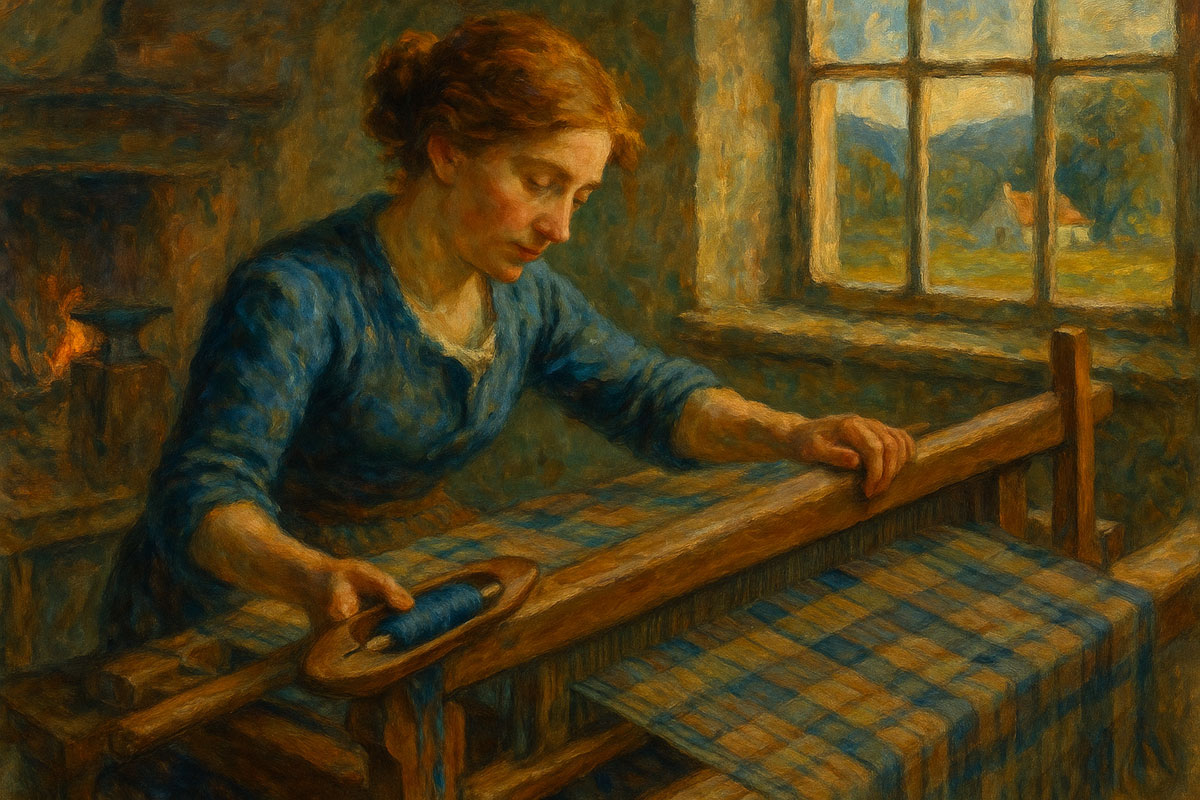

Discover the remarkable rebirth of traditional Irish craftsmanship — from handwoven textiles to the fiery forge, as we explore the past, present, and future of Ireland’s handmade heritage.
Table of Contents
- The Soul of Irish Craftsmanship
- Wool and Weave: The Resurgence of Handwoven Textiles
- Hammer and Flame: Ireland’s Blacksmithing Revival
- Passing the Torch: Craft Schools, Apprenticeships & Innovation
The Soul of Irish Craftsmanship
Irish crafts have always been more than functional – they carry the spirit of the land, the memory of ancestors, and the resilience of a people who have weathered centuries of change. From the clatter of the weaver’s loom to the ringing sound of hammer on anvil, each tradition tells a story of artistry and survival.
Today, many of these age-old skills are being lovingly revived across Ireland. In a world increasingly dominated by mass production, the return to handcraft is more than a nostalgic nod to the past—it’s a cultural renaissance. Rural communities, creative collectives, and passionate artisans are bringing back the magic of heritage crafts, blending ancient techniques with contemporary expression.
The Historical Role of Crafts in Irish Society
For much of Ireland’s history, craftsmanship was essential to daily life. Weaving, pottery, leatherwork, metal forging, basketry, and wood carving were not just trades—they were lifelines. Local makers produced everything from clothing to farming tools, forming the backbone of self-sufficient rural communities.
Many Irish surnames even reflect ancestral crafts: McGowan (from “gabhann” meaning blacksmith), Mac an Ghabhann (son of the smith), or O’Tuama (associated with weavers). These names echo an era when craftsmanship was passed through generations as both legacy and livelihood.
Crafts in Decline – and a Cultural Turning Point
By the mid-20th century, the industrial revolution and emigration led to the steep decline of traditional crafts. The mechanization of weaving and the rise of mass-manufactured goods pushed many artisans out of work. As younger generations sought new opportunities abroad, the knowledge of handcraft dwindled. What once was everyday skill became rare folklore.
Yet, this loss didn’t go unnoticed. In the late 20th and early 21st centuries, a quiet movement began to form. Heritage organizations, artists, and local historians began to document, preserve, and reintroduce these fading arts. Festivals, markets, and workshops rekindled interest, especially among Irish people seeking deeper roots and sustainable practices.
Why Craft Matters Today
The revival of Irish crafts is more than aesthetic—it intersects with key modern values:
- Sustainability: Handmade crafts use natural materials and minimize industrial waste.
- Cultural identity: Traditional techniques connect modern Irish people with their past.
- Local economies: Artisan work supports rural employment and tourism.
- Mindful living: Handcrafts foster creativity, patience, and a connection to the physical world.
As a result, we’re witnessing a growing interest in reclaiming skills like weaving, blacksmithing, and woodcarving. These are no longer seen as outdated trades, but as powerful expressions of culture, artistry, and sustainability.
Wool and Weave – The Resurgence of Handwoven Textiles
Of all Irish crafts, weaving has one of the deepest roots. For centuries, wool and linen were woven by hand in cottages across the country, with regional styles and techniques that told stories of place and lineage. Today, these threads are being picked up once again, literally and figuratively, in workshops and weaving studios from Donegal to Dingle.
From Cottage Looms to International Recognition
Historically, Irish families produced their own textiles using wool from local sheep or flax for linen. Spinning wheels and handlooms were common fixtures in rural homes. This work, often done by women, was a vital part of community life and the rural economy.
In the 19th century, Donegal tweed emerged as a global export—its vibrant colors inspired by the wild landscape of the northwest. Though mechanization crept in, many Donegal weavers maintained their handwoven identity, ensuring the survival of this rich tradition into the modern era.
The Weaving Revival Today
In recent years, weaving has found new life among younger artisans and conscious consumers. The slow fashion movement, with its emphasis on ethical production and local materials, has helped reposition Irish wool and linen as prized materials.
Here are just a few examples of how the weaving revival is taking shape:
- Studio Donegal – Based in Kilcar, County Donegal, this family-run business has been weaving cloth by hand for generations, producing traditional tweeds in bold, modern palettes.
- Cushendale Woollen Mills – Located in Graiguenamanagh, County Kilkenny, this mill dates back to the 1700s and uses Irish wool and mohair to create luxurious throws, scarves, and blankets.
- Irish Linen Guild – Supporting genuine Irish linen producers and helping preserve the legacy of flax weaving in Northern Ireland.
Alongside established mills, independent weavers are using smaller handlooms and experimenting with new techniques. Many combine traditional motifs with modern design, offering everything from wall hangings to wearable art.
Learning to Weave – A Growing Interest
The renewed interest in Irish weaving isn’t limited to established artisans. Craft schools, cultural centers, and online platforms now offer courses in spinning, dyeing, and weaving, often taught by master weavers with decades of experience.
Popular venues include:
- The Crafts Council of Ireland – Offers workshops, exhibitions, and support for aspiring textile artists.
- The Constant Knitter (Dublin) – A hub for wool lovers, offering classes in weaving, spinning, and felting.
- Ballymorris Pottery & Craft Studio – Occasionally offers weaving workshops alongside their regular pottery programs.
This return to the loom is also part of a wider desire for tactile skills in a digital age. More people are seeking out mindful, meditative crafts that allow them to disconnect from screens and reconnect with tradition.



Hammer and Flame – Ireland’s Blacksmithing Revival
In the glow of the forge, sparks fly and ancient skills awaken. Blacksmithing has long held a place of reverence in Irish history, where smiths were considered not only skilled tradespeople but figures of deep symbolic and spiritual power. Today, that legacy is experiencing a rebirth, with forges reignited and the clang of hammers ringing once more in towns and villages across the country.
Ancient Roots of the Irish Smith
In Celtic mythology, the smith held a semi-mystical role. Figures like Goibniu, the divine smith of the Tuatha Dé Danann, were said to forge weapons of invincibility. In medieval society, blacksmiths made everything from swords and horseshoes to ploughshares and cooking pots. They were vital to the survival of the community—and often respected for their strength, precision, and elemental mastery.
Irish blacksmiths typically worked in small, open-air forges, using bellows, anvils, and hammers to shape red-hot metal. The work was hard and dirty, but it commanded respect. By the 19th and early 20th centuries, every town had at least one forge, often a social hub as well as a workshop.
Decline and Rediscovery
As with weaving, blacksmithing declined with the arrival of industrialization. Mass-produced tools and machinery replaced handcrafted items, and many rural forges closed by the mid-1900s. The blacksmith, once central to Irish life, became a fading memory.
Yet, the craft never fully disappeared. A handful of families passed down their skills, while folklorists and ethnographers documented blacksmithing techniques and oral histories. In the 21st century, a new wave of artisans is stepping forward—not to reenact history, but to forge a living tradition for the future.
Modern Irish Blacksmiths: Artistry Meets Heritage
Today’s Irish blacksmiths are both preservationists and innovators. Many blend traditional tools and techniques with modern design, creating everything from replica medieval weapons to sculptural ironwork for homes and gardens.
Notable figures and initiatives include:
- Sean McGarry – A master blacksmith based in County Mayo, known for his handcrafted gates, tools, and artistic metalwork rooted in Irish motifs.
- The Irish Artist Blacksmiths Association (IABA) – A national network that promotes education, events, and exhibitions in traditional and contemporary forging.
- Ceardlann na gCroisbhealach (Crossroads Forge) – A heritage forge in County Clare that offers demonstrations, classes, and historical reconstructions.
Many of these smiths take commissions for bespoke gates, candleholders, signage, and garden pieces—each item a fusion of utility and aesthetic craftsmanship.
Learning to Work the Forge
Interest in blacksmithing as a hobby and career has surged in recent years. Craft schools, local heritage centers, and individual smiths now offer introductory and advanced forging classes. These experiences attract everyone from historical reenactors to design students and sustainability advocates.
Popular learning venues include:
- The National Heritage Centre (Wexford) – Offers hands-on blacksmithing workshops that immerse visitors in the tools and skills of ancient Ireland.
- Leitrim Sculpture Centre – Hosts courses in artistic blacksmithing and metal sculpture, attracting both traditional and experimental makers.
- Furnace Festival (County Clare) – An annual celebration of metalworking, fire arts, and traditional forge culture with live demonstrations and public participation.
Keeping the Flame Alive
Reviving blacksmithing in Ireland isn’t just about preserving history—it’s about reclaiming a sense of craftsmanship, pride, and personal connection to the materials we use. As sustainability and local production become more valued, hand-forged tools and metalwork have found a new relevance in contemporary life.
From heritage restorations to artistic commissions, the forge once again holds a place in Ireland’s creative and cultural landscape.
Passing the Torch – Craft Schools, Apprenticeships & Innovation
The revival of Irish crafts is not simply a return to the past—it’s an investment in the future. From weaving and blacksmithing to basketry, woodturning, and ceramics, a new generation of Irish makers is blending tradition with innovation. These artisans are not only preserving centuries-old skills but also reimagining them for a modern world.
Craft Schools and Cultural Hubs
Across Ireland, craft schools, co-operatives, and cultural centers are leading the way in skill development. These institutions provide hands-on learning opportunities for aspiring artisans, offer studio spaces, and help makers develop sustainable craft businesses.
Some notable centers include:
- Crafts Council Ireland (Kilkenny) – The national body for the craft and design sector. It supports training, residencies, exhibitions, and networking for makers of all disciplines.
- Grennan Mill Craft School (Thomastown, Co. Kilkenny) – Offers full-time and part-time courses in textiles, metalwork, and fine crafts in a historic riverside mill setting.
- Bridge Street Studios (Dundalk, Co. Louth) – A shared workspace where artists and craftspeople collaborate and share skills while hosting workshops and open studio events.
Apprenticeships and Mentorship
Passing on practical knowledge is central to keeping traditional Irish crafts alive. Many veteran artisans are now taking on apprentices or offering mentorships, teaching techniques that are difficult to learn from books or videos alone. These one-on-one or small group experiences ensure that hand skills, intuition, and craft “secrets” are not lost.
The revival of apprenticeships also strengthens rural economies. Young people in farming and fishing communities are rediscovering craft as a viable profession—restoring pride in local heritage while opening doors to creative entrepreneurship.
Craft Meets Innovation
Today’s Irish craftspeople are combining age-old techniques with new tools and global inspiration. Digital platforms allow artisans to showcase and sell their work worldwide. Some integrate laser cutters or 3D printing into their process; others mix media, pairing forged iron with stained glass or wool with ceramics.
Examples of innovative makers include:
- Jennifer Slattery Textiles – Known for combining traditional Irish linen with contemporary embroidery design, creating elegant homeware and accessories.
- James Molloy Woodcraft – A Galway-based woodturner blending native Irish woods with minimalist modern design.
- The Irish Design Shop (Dublin) – Showcases work from emerging and established Irish makers, highlighting how tradition and trend can coexist beautifully.
Tourism and the Irish Craft Economy
Craft-based tourism is becoming a growing sector in Ireland. Visitors seek authentic experiences: watching a smith at work, spinning wool on a traditional wheel, or participating in a hands-on workshop. Craft trails, festivals, and local markets provide unique opportunities to connect travelers with heritage and community.
Initiatives like the Design & Crafts Council’s “Made Local” campaign are encouraging consumers to support Irish makers. Meanwhile, shops and museums such as the National Craft Gallery and Ardara Heritage Centre continue to educate the public about the cultural value of craft.
A Living Legacy
The revival of Irish crafts is not just about preserving artifacts—it’s about sustaining a living, evolving legacy. Through education, collaboration, and creativity, today’s makers are ensuring that skills like weaving and blacksmithing remain vibrant parts of Ireland’s cultural identity.
Whether it’s a loom in a city studio or a rural forge nestled in the hills, Irish craft traditions are being shaped anew—by hands rooted in history and eyes focused on the future.
← Back to Part 1: The Soul of Irish Craftsmanship