



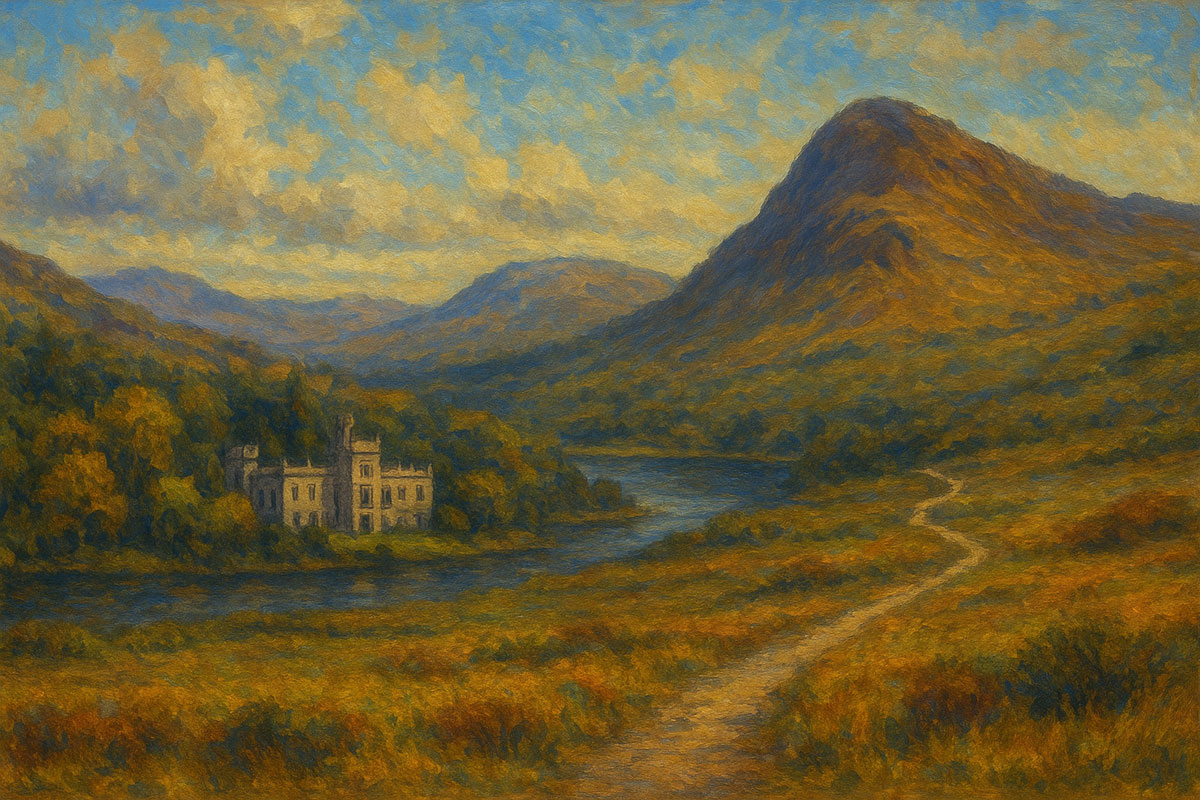

Connemara National Park is one of Ireland’s most breathtaking landscapes, where rugged mountains, sweeping boglands, and a rich cultural history come together in harmony. Located in County Galway, this 2,957-hectare park is more than just a natural wonder – it is a place where Irish history, folklore, and rural traditions are etched into the land.
Table of Contents
- The Origins of Connemara National Park
- Landscape and Geology: Shaped by Time and Nature
- Wildlife and Flora: A Haven for Biodiversity
- Cultural Heritage and Visitor Experience
The Origins of Connemara National Park
Connemara National Park, officially opened in 1980, is one of six national parks in Ireland, but its story begins long before its establishment. The land that forms the park was once part of the Kylemore Abbey estate and various privately owned farmlands. Over the centuries, it has witnessed the footsteps of monks, farmers, and shepherds, all of whom left their mark on the rugged landscape.
The park stretches across nearly 3,000 hectares of mountains, bogs, heaths, and woodlands. Its most famous peak, Diamond Hill, towers above the surrounding scenery and offers some of the best panoramic views in the west of Ireland. The land, though wild and untamed in appearance, tells stories of human struggle, resilience, and adaptation. Dry-stone walls, abandoned sheep folds, and potato ridges dating back to the Great Famine can still be seen, silently narrating Ireland’s history.
From Kylemore Abbey to National Park
Kylemore Abbey, built in the 19th century, lies just outside the park and is closely connected to its story. Much of the land was originally owned by the Benedictine nuns who settled there after fleeing Belgium during World War I. In later decades, large portions were acquired by the Irish state with the goal of conservation, public access, and preserving the unique habitats of Connemara.
By 1980, Connemara National Park was officially designated as a protected space. Its creation reflected Ireland’s growing awareness of the need to safeguard natural landscapes, not only for biodiversity but also for cultural and educational purposes. The park has since become a major attraction, drawing both tourists and locals who seek to connect with the raw beauty of Ireland’s west coast.
The Historical Landscape
Walking through Connemara National Park is like stepping back in time. The remains of prehistoric megalithic tombs suggest that people lived and farmed in this area thousands of years ago. During the medieval period, the land was used for grazing and small-scale farming. However, the harsh terrain and poor soil meant survival was always a challenge.
The Great Famine of the 1840s hit Connemara particularly hard, and the ghostly ridges of abandoned potato fields are still visible today. These ridges, etched into the boggy soil, serve as a reminder of the suffering endured by local communities. Yet they also highlight the deep resilience of the people who remained, rebuilding life in one of Ireland’s most unforgiving landscapes.
Folklore and Myth in the Park
Connemara is steeped in folklore, and the parkland is no exception. Tales of fairies, spirits, and ancient heroes are woven into the hills and valleys. Diamond Hill, in particular, has inspired many legends. Some say it is a place where the veil between worlds is thin, while others believe the mountain was a sacred site for ancient rituals. These stories, passed down through generations, add a mystical quality to the already dramatic scenery.
Why the Origins Matter
Understanding the origins of Connemara National Park allows visitors to see it as more than just a scenic landscape. It is a living record of Ireland’s history – from prehistoric settlers to famine survivors, from religious communities to modern conservationists. The park embodies both natural beauty and human endurance, making it one of the most meaningful destinations in Ireland.
Landscape and Geology – Shaped by Time and Nature
The beauty of Connemara National Park lies not only in its vast open spaces but also in the story written into its very rock and soil. Shaped over millions of years by geological forces, glacial activity, and Atlantic weather, the park’s landscape is a striking blend of rugged mountains, rolling boglands, and shimmering lakes. This natural canvas is both dramatic and deeply symbolic of Ireland’s wild west coast.
The Twelve Bens and Diamond Hill
At the heart of Connemara’s skyline stand the Twelve Bens, a mountain range renowned for its sharp peaks and breathtaking vistas. These quartzite mountains, formed around 700 million years ago, are some of the oldest in Europe. They dominate the horizon, offering hikers a challenging climb and unforgettable panoramic views of the Atlantic and the surrounding lowlands. Among them, Diamond Hill has become the park’s most iconic feature. Its well-maintained walking trails make it accessible to visitors of all levels, and at the summit, the views stretch across Kylemore Abbey, Killary Harbour, and the sweeping expanse of Connemara.
The Influence of the Ice Age
The park’s unique topography was heavily shaped by glacial activity during the last Ice Age. As glaciers advanced and retreated, they carved out U-shaped valleys, scattered boulders across the terrain, and left behind shimmering lakes known as tarns. Today, these features give Connemara its distinctive ruggedness, with rocky ridges sitting alongside bog-filled valleys and calm mountain lakes. The glacial past explains much of the park’s character and contributes to the sense of timelessness that visitors often feel.
Bogs and Peatlands
No description of Connemara’s landscape is complete without mentioning its vast bogs. Blanket bog, a rare ecosystem, covers much of the park. Formed over thousands of years in Ireland’s wet and windy climate, these peatlands are up to several meters deep and preserve a record of the environment stretching back millennia. Layers of pollen, plants, and even ancient wooden trackways have been discovered in bogs, offering scientists a glimpse into Ireland’s ecological and human past. Traditionally, peat was cut and used as fuel, but today, the park’s bogs are protected for their ecological importance.
Lakes, Rivers, and Coastline
Connemara National Park is dotted with small lakes and intersected by winding rivers, each reflecting the changing sky in brilliant shades of blue and gray. These freshwater habitats are vital to the park’s wildlife, from trout to wading birds. Beyond the park’s boundaries, the Atlantic Ocean crashes against the Connemara coast, linking the inland mountains and bogs to the sea. This connection between land and ocean gives Connemara its unique character – a meeting point of freshwater, saltwater, stone, and sky.
Weather and Atmosphere
The weather in Connemara is as much a part of the landscape as the mountains themselves. Mist often clings to the peaks, rain showers sweep across the valleys, and shafts of sunlight break through the clouds to illuminate the bogs in golden hues. For many visitors, this ever-changing atmosphere is part of the park’s charm. A single walk can take you through sunshine, rain, and mist, each revealing the landscape in a different light. It is little wonder that poets, painters, and photographers have long been drawn to capture Connemara’s moods.
Why the Geology Matters
The geology and landscape of Connemara National Park are more than just scenic backdrops. They tell a story of time, resilience, and adaptation. From ancient quartzite mountains to bogs that hold the secrets of Ireland’s past, the land itself is a living archive. Visitors who pause to consider the forces that shaped Connemara gain a deeper appreciation of its significance – not only as a natural wonder but as a place where nature and history are inseparably intertwined.
Wildlife and Flora – A Haven for Biodiversity
Connemara National Park is not only a geological wonder but also a sanctuary for a remarkable range of wildlife and plant life. Its unique mix of mountains, bogs, woodlands, and waterways supports species that have adapted to the harsh yet diverse conditions of Ireland’s Atlantic coast. For nature enthusiasts, the park offers endless opportunities to encounter rare birds, native mammals, and plant species found nowhere else in the country.
Birdlife of Connemara
The park is a paradise for birdwatchers. From the sweeping skies above Diamond Hill to the wetlands and bogs, a variety of birds make their home here. Meadow pipits, skylarks, and stonechats are common sightings, their songs filling the air in spring and summer. More elusive species, such as the peregrine falcon, soar high above the cliffs and ridges. During winter, migratory birds arrive, adding even more diversity to the avian population. For those with patience and a keen eye, spotting a merlin or a woodcock can be a highlight of their visit.
Mammals of the Park
Though less visible than the birds, mammals thrive in the wild expanses of Connemara. Red deer, once nearly extinct in Ireland, can sometimes be seen in the park’s remoter areas. Mountain hares are well adapted to the high ground, changing their fur color to blend with the seasons. Pine martens, otters, and foxes also inhabit the park, though they are mostly active at dawn and dusk. The diversity of mammals reflects the park’s varied habitats, from wooded glens to open bogs.
Plant Life and Unique Flora
The bogs of Connemara are home to plants specially adapted to nutrient-poor conditions. Carnivorous plants such as sundews and butterworts thrive here, drawing nutrients from insects rather than the soil. Heather, bog cotton, and sphagnum moss dominate the landscape, adding color and texture to the sweeping boglands. In higher altitudes, alpine plants cling to rocky slopes, surviving in thin soils and harsh winds. The park’s flora is a vivid example of nature’s ability to adapt and flourish in challenging conditions.
Woodlands and Reforestation
Though Connemara is often associated with open, treeless spaces, woodlands are an important part of the park’s ecosystem. Native trees such as oak, birch, and rowan grow in sheltered areas, providing habitats for birds and mammals. In recent decades, reforestation efforts have aimed to restore native woodlands, strengthening biodiversity and improving the park’s ecological balance. These young forests are a hopeful reminder of the potential for renewal even in landscapes once stripped bare.
Insects, Amphibians, and Smaller Creatures
Beneath the soaring birds and roaming mammals lies a world of smaller yet equally vital creatures. The park is alive with butterflies, dragonflies, and bees, particularly in summer when wildflowers bloom across the bogs and meadows. Frogs and newts inhabit the wetter areas, while countless invertebrates form the base of the food web, sustaining larger species. This hidden world is crucial for the park’s ecological health and resilience.
A Living Classroom
For scientists, students, and casual visitors alike, Connemara National Park serves as a living classroom. Its ecosystems illustrate how plants and animals adapt to changing conditions, while its protected status ensures that these habitats will endure for generations to come. The diversity of wildlife and flora is not just a natural treasure – it is a reminder of the importance of conservation in a rapidly changing world.
Cultural Heritage and Visitor Experience
Connemara National Park is more than a place of natural beauty – it is a landscape deeply intertwined with Irish culture, history, and tradition. From the ancient people who once farmed its rugged soils to the communities that continue to celebrate Connemara’s unique heritage, the park embodies a living link between past and present. Visitors not only explore its trails and scenery but also discover stories of survival, creativity, and identity that define Ireland’s west coast.
Echoes of the Past
Scattered across the park are remnants of Ireland’s long history. Prehistoric tombs, early Christian sites, and famine-era potato ridges bear witness to the generations who lived and struggled here. These physical traces remind visitors that Connemara was never just wilderness – it has been shaped by human hands for thousands of years. The abandoned farms and ruined stone cottages tell tales of hardship during the Great Famine, when many families left the land in search of survival elsewhere.
Gaelic Traditions and Language
Connemara is one of Ireland’s strongest Gaelic-speaking regions, and the park lies at the heart of this cultural landscape. Irish (Gaeilge) is still widely spoken in nearby communities, and local folklore, music, and traditions enrich the visitor experience. For many travelers, hearing the Irish language in daily life and in storytelling sessions adds a unique dimension to their journey. This living tradition connects modern visitors to Ireland’s ancient roots and emphasizes the importance of preserving cultural heritage alongside natural heritage.
The Visitor Centre at Letterfrack
The park’s Visitor Centre, located in the village of Letterfrack, is the perfect starting point for exploration. Housed in buildings once part of an industrial school run by Christian Brothers, the centre now serves as an educational and welcoming hub. Exhibits showcase the park’s geology, wildlife, and history, while interactive displays help children and adults alike understand the importance of conservation. From here, trails of varying difficulty levels lead into the heart of the park, including the much-loved Diamond Hill walks.
Walking Trails and Outdoor Adventures
Connemara National Park offers walking routes suitable for all abilities, from short nature walks to challenging mountain hikes. The Lower Diamond Hill trail is a family-friendly option, while the Upper Diamond Hill loop rewards climbers with breathtaking 360-degree views. Along the way, interpretive panels explain the history, flora, and fauna of the area, making every walk both a physical and educational journey. Beyond hiking, the park also provides opportunities for picnics, photography, and nature observation, making it a versatile destination for different interests.
Festivals and Local Connections
The communities surrounding the park contribute greatly to its cultural vibrancy. Traditional music sessions in pubs, local craft markets, and seasonal festivals allow visitors to immerse themselves in Connemara life. Many visitors combine a trip to the park with a visit to Kylemore Abbey or a drive along the Wild Atlantic Way, both of which showcase the broader cultural and natural richness of the region.
A Place of Reflection and Inspiration
For many, Connemara National Park is more than a tourist destination – it is a place of reflection and inspiration. Writers, painters, and musicians have long drawn creative energy from its landscapes. Visitors often describe a deep sense of peace while standing on Diamond Hill or watching the shifting light across the bogs. This emotional connection is part of what makes Connemara so special: it speaks not only to the eye but also to the soul.
Visiting Today
Today, Connemara National Park continues to balance conservation with accessibility. Entry is free, making it an inclusive attraction for families, travelers, and local residents. Guided tours, educational programs, and seasonal events ensure that there is always something new to discover. Whether you come to hike, learn, or simply soak in the beauty, the park offers an experience that lingers long after you leave.
Conclusion: Connemara National Park is where nature and history meet in harmony. Its landscapes tell the story of time and geology, its wildlife thrives in protected habitats, and its culture reflects the resilience of Ireland’s west. For anyone seeking to experience the heart of Irish heritage while surrounded by unspoiled natural beauty, Connemara National Park is a destination that truly embodies the spirit of the Emerald Isle.