

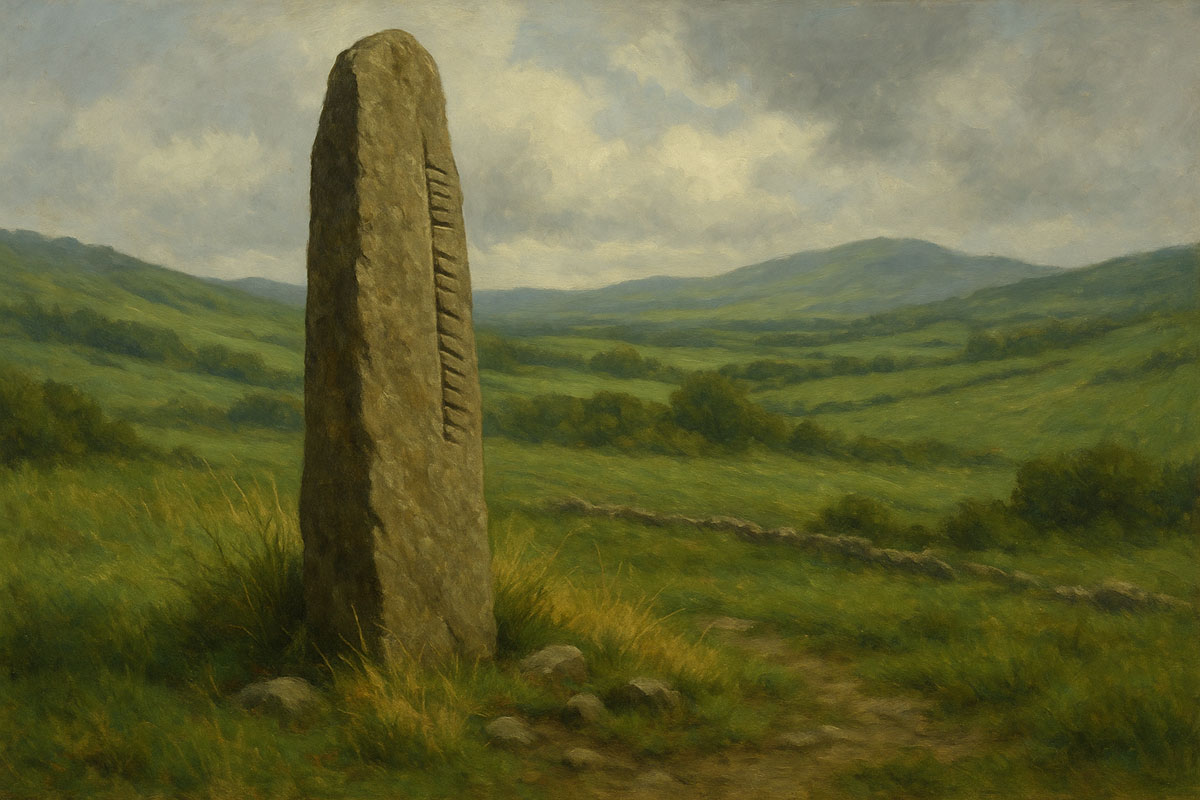

Scattered across Ireland’s fields and valleys stand mysterious stone pillars carved with cryptic lines and notches. These are the Ogham stones — the earliest form of Irish writing. They offer us a fascinating window into the people, languages, and traditions of early medieval Ireland.
Table of Contents
- The Origins of Ogham Script
- Ogham Stones Across Ireland
- Decoding the Language of Ogham
- The Legacy and Preservation of Ogham Today
The Origins of Ogham Script
Ogham (pronounced “oh-am”) is considered Ireland’s earliest known system of writing, dating from around the 4th to 7th centuries AD. The script is unique: instead of letters carved in familiar shapes, Ogham consists of groups of straight lines or notches etched along the edge of a stone. Each grouping represents a letter in the Ogham alphabet, which contained roughly 20 characters.
Most scholars believe Ogham was devised as a way to record the early Irish language, possibly influenced by Latin writing introduced during the Roman era. Others argue it may have had ritual or symbolic purposes before being used for inscriptions. The script’s origins remain debated, but what is clear is its role in marking identity and territory in early medieval Ireland.
According to Irish myth, Ogham was created by Ogma, a Celtic god of eloquence and learning. This divine connection highlights the cultural significance of the script, which was not only practical but also sacred in the eyes of its people.
Ogham Stones Across Ireland
Over 400 Ogham stones have been discovered, most concentrated in Ireland’s southern counties such as Kerry, Cork, and Waterford. These standing stones often marked boundaries, commemorated the dead, or displayed family lineages. Many were erected near important tribal lands or ancient pathways, serving as public records in a largely oral culture.
One striking example is the Ballintaggart Ogham Stones in County Kerry, where multiple pillars stand in a cluster, forming what may have been an early Christian site. Another famous site is the Derrynane Ogham Stone, located near the birthplace of Daniel O’Connell, connecting modern history with ancient heritage.
These stones often bear inscriptions naming individuals — usually male ancestors — along with their tribal affiliation. For example, a typical translation might read: “Stone of X, son of Y, of the tribe of Z.” Such inscriptions provided legitimacy in a world where kinship and land rights were everything.
Though most stones are in Ireland, Ogham inscriptions have also been found in Wales, Scotland, and the Isle of Man, showing the reach of Irish settlers and missionaries across the Celtic world.
Decoding the Language of Ogham
The Ogham alphabet, or feda, was organized around four groups of strokes called “aicme.” Each letter was represented by one to five notches placed either to the left, right, across, or diagonally along a central line — usually the edge of a stone. For instance, one notch to the right represented the letter “B,” while three notches to the left signified “S.”
Deciphering Ogham was once a great challenge. Today, thanks to scholarship and linguistic study, we know that most inscriptions are written in Primitive Irish, the earliest form of the Irish language. They capture names, lineages, and sometimes territorial claims. In essence, Ogham stones are Ireland’s earliest gravestones and legal documents combined.
The script’s design also suggests it may have been used on wood long before stone, possibly as tally sticks or ritual markers. Wood, however, decays — which may explain why stone Ogham inscriptions are the ones that survived.
For modern enthusiasts, decoding Ogham has become a cultural bridge. Some even create jewelry, artwork, and tattoos based on Ogham characters, connecting with ancestral heritage through this ancient code.
The Legacy and Preservation of Ogham Today
Today, Ogham stones are protected as vital parts of Ireland’s archaeological and cultural heritage. The National Monuments Service and local heritage groups work to document and safeguard them, though many remain in remote fields, weathered by centuries of wind and rain.
In digital times, Ogham has found new life. Scholars and hobbyists use online databases to catalog inscriptions, while educational programs introduce schoolchildren to this unique alphabet. Irish heritage trails, especially in Kerry and Cork, feature Ogham stones as focal points for visitors, blending archaeology with storytelling.
The legacy of Ogham is more than academic. It symbolizes identity, continuity, and the creativity of a people who developed their own script to express lineage and belonging. For the Irish diaspora, Ogham has become a symbol of connection, offering a tangible link to ancestral lands and ancient voices etched in stone.
Conclusion
Ogham stones stand as silent witnesses to Ireland’s earliest written traditions. More than carved marks, they embody a society where language, kinship, and land defined life. By decoding Ogham, we do more than study an ancient alphabet — we unlock stories of families, tribes, and the enduring spirit of Ireland itself.