


When the Normans landed in Ireland during the late 12th century, they brought with them more than armies — they introduced stone castles, walled towns, and systems of law and governance that reshaped the island. Their footprint remains etched in Ireland’s medieval architecture and heritage to this day.
Table of Contents
- The Arrival of the Normans in Ireland
- Castles of Stone: Symbols of Norman Power
- Walled Towns and Market Life
- The Norman Legacy in Modern Ireland
The Arrival of the Normans in Ireland
The Norman story in Ireland begins in 1169, when a group of Anglo-Norman knights landed at Bannow Bay in County Wexford to aid Dermot MacMurrough, the exiled King of Leinster. In return for their support, MacMurrough promised land and power, laying the groundwork for a dramatic new era in Irish history.
The most famous Norman leader was Richard de Clare, known as Strongbow, whose marriage to MacMurrough’s daughter cemented his influence. Within decades, the Normans established a strong foothold, capturing Dublin, Waterford, and much of the southeast. Their arrival introduced new systems of governance, law, and fortification, fundamentally altering Irish society.
Unlike the Viking raids of earlier centuries, Norman settlement was designed to last. Their strategy was one of consolidation, with castles, towns, and churches built to secure both military and economic control.
Castles of Stone: Symbols of Norman Power
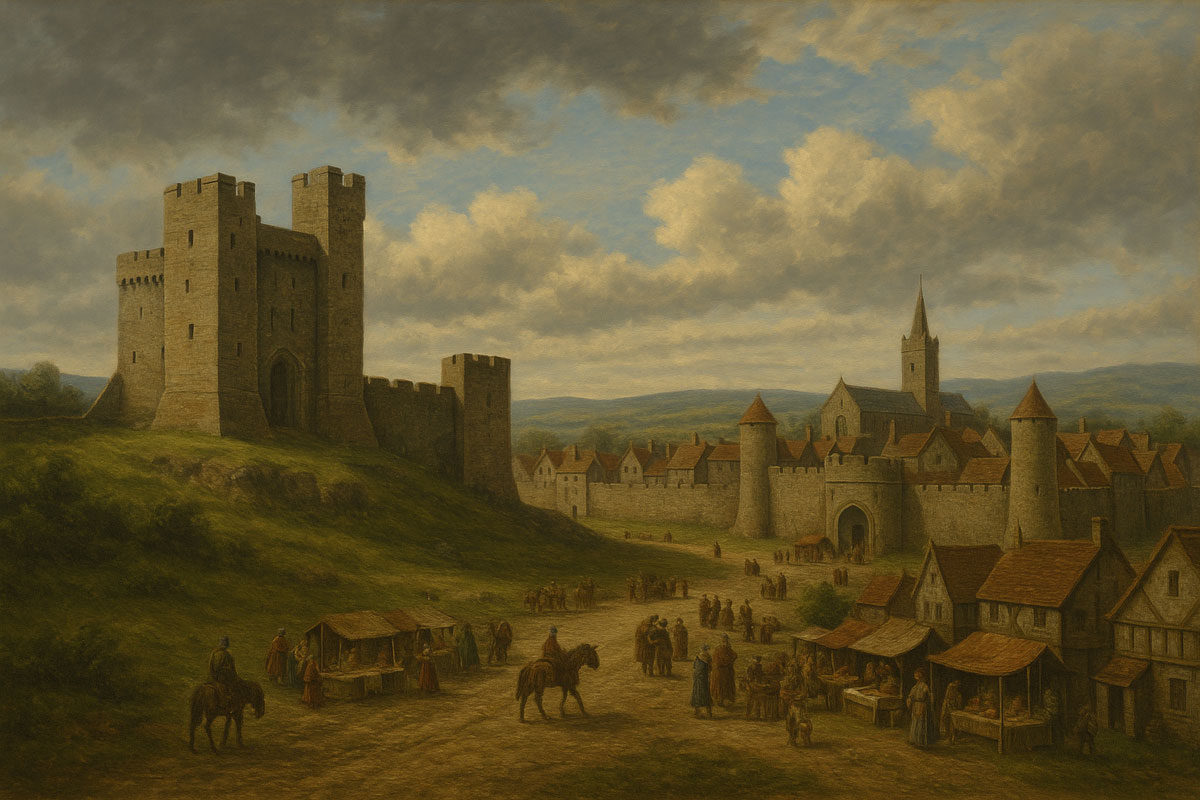
One of the most visible Norman contributions to Ireland is its network of castles. While earlier Irish kings built wooden fortifications or hillforts, the Normans introduced stone keeps and motte-and-bailey castles that still dominate parts of the landscape today.
Trim Castle in County Meath, the largest Anglo-Norman castle in Ireland, is a striking example. Its massive keep and curtain walls reflect the military might and ambition of its builders. Similarly, Kilkenny Castle became not only a fortress but also a seat of administration and later a stately residence, shaping the identity of the town around it.
Other Norman castles, such as Carrickfergus in Antrim and Ferns in Wexford, showcase the strategic placement of fortresses near rivers, coasts, and trade routes. These castles projected authority, deterred rebellion, and became centers of feudal power, where Norman lords managed their lands and tenants.
The architectural style of Norman castles — square keeps, rounded towers, and fortified gateways — left a permanent mark on Irish building traditions. Many were later expanded or repurposed, blending Norman and Gaelic influences over time.
Walled Towns and Market Life
Alongside castles, the Normans transformed Ireland with walled towns. They established settlements such as Kilkenny, Wexford, and Carlingford, built around markets, churches, and defensive walls. These towns introduced urban life on a scale previously unknown in much of Ireland.
Norman towns were centers of commerce, where trade in goods like wool, salt, wine, and grain flourished. Markets and fairs became crucial for economic life, connecting Ireland to broader European networks. Craftsmen, merchants, and farmers all played a role in these bustling communities.
The layout of Norman towns often followed a grid-like pattern, with streets radiating from a central marketplace or church. High stone walls and gatehouses provided security, while cathedrals and monasteries reflected both religious devotion and political authority.
In many cases, these towns grew into the cities we know today. Kilkenny’s medieval core, with its castle, cathedral, and streetscape, is a prime example of Norman urban planning that still shapes Irish heritage tourism.
The Norman Legacy in Modern Ireland
Though Gaelic Ireland eventually reasserted itself in many regions, the Norman impact endured. The descendants of Norman settlers — often called the “Old English” — blended into Irish society, adopting Gaelic customs while retaining elements of their heritage.
Architecturally, Norman castles and town walls remain some of Ireland’s most visited heritage sites. Trim Castle, Kilkenny Castle, and Carrickfergus continue to attract visitors, serving as reminders of the power struggles and cultural exchanges of the medieval era.
Culturally, the Normans introduced new systems of governance, from feudal landholding to urban councils, some of which influenced Irish administration for centuries. They also left linguistic traces, with Norman French words entering the Irish and English spoken on the island.
In modern times, the Norman legacy is celebrated as part of Ireland’s layered history. Festivals, reenactments, and heritage trails allow people to experience the medieval world, walking the same streets and standing within the same walls built nearly 900 years ago.
Conclusion
The Normans did not simply invade Ireland — they reshaped it. Through their castles, towns, and systems of rule, they left a footprint that endures in stone and story alike. Exploring Norman sites today reveals not only Ireland’s medieval struggles but also its resilience and capacity to integrate new influences into a rich cultural tapestry.