


Irish folklore is filled with mysterious beings who dwell between the worlds of the seen and unseen. From mischievous fairies to wailing banshees, these mythical creatures reveal the depth of Ireland’s imagination — and the beliefs that once shaped daily life on the island.
Table of Contents
- The Fair Folk: Ireland’s Hidden People
- The Banshee: Messenger of Death
- Shape-Shifters, Spirits, and Sea Beings
- The Enduring Legacy of Irish Folklore Creatures
The Fair Folk — Ireland’s Hidden People
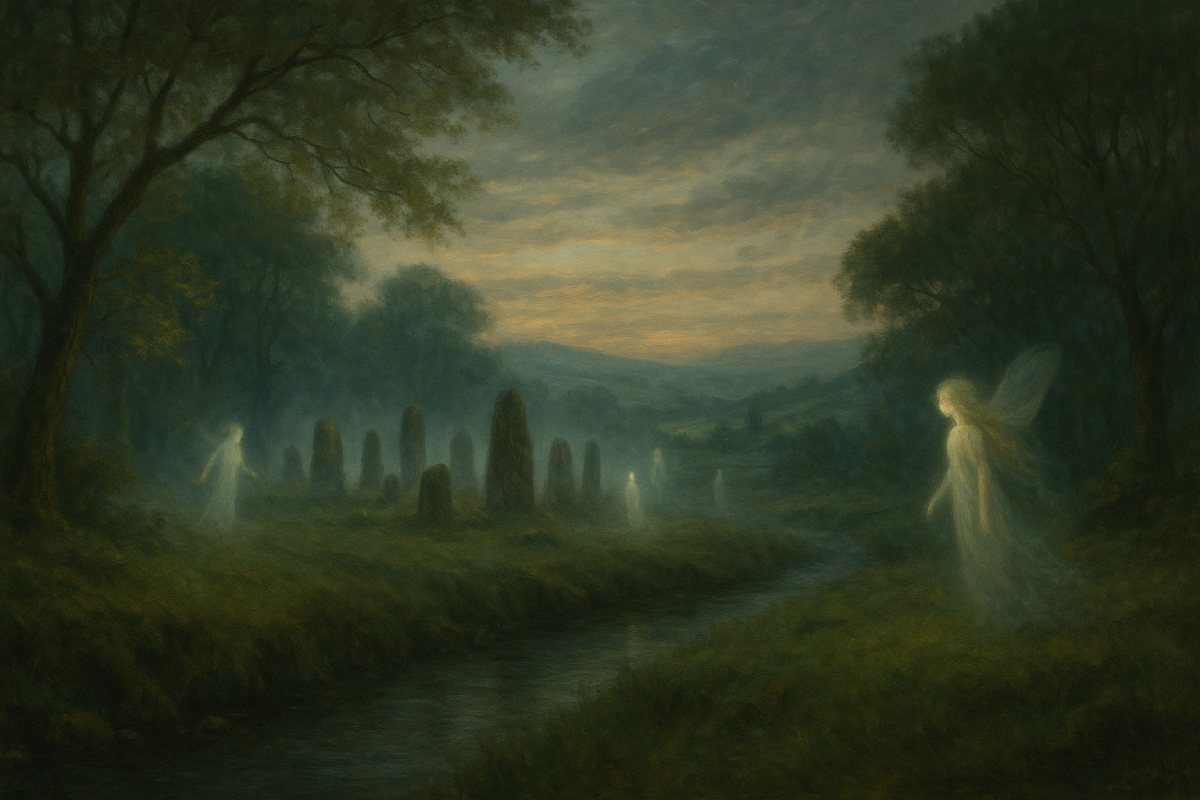
No creatures are more central to Irish folklore than the fairies, often called the Fair Folk or Daoine Sídhe. Unlike the delicate winged sprites of Victorian imagination, Irish fairies were powerful, unpredictable beings who lived in the Otherworld — a realm existing alongside our own.
According to legend, the Fair Folk descended from the Tuatha Dé Danann, an ancient race of gods who retreated underground after being defeated by mortal men. They made their homes in earthen mounds, or síde, which dot the Irish landscape to this day. Many rural communities still treat fairy forts and rings with deep respect, refusing to disturb them for fear of bad luck.
Fairies could bring blessings or misfortune. They were said to steal away those who offended them — especially children, leaving behind changelings. Offerings of milk, bread, or butter were left outside homes to keep them appeased. Even today, when a hawthorn tree stands alone in a field, it is often left untouched, for it may be a fairy tree — a gateway between worlds.
The Banshee — Messenger of Death
Few spirits capture the haunting beauty of Irish folklore like the Banshee (Bean Sí, or “woman of the fairy mound”). She is not evil, but a messenger who mourns impending death. Her keening — a chilling, sorrowful wail — is said to echo outside homes when a member of an old Irish family is about to die.
Descriptions of the Banshee vary. Sometimes she appears as a young woman with flowing silver hair, combing it beside a stream. Other tales portray her as an aged crone wrapped in a grey cloak. In every version, she is bound to certain families, often those with surnames beginning with “O” or “Mac.”
The legend of the Banshee may have roots in the ancient tradition of professional mourners, or bean chaointe, who would lament the dead with ritual song. Over centuries, this human custom merged with the supernatural, becoming one of Ireland’s most enduring folk beliefs.
Shape-Shifters, Spirits, and Sea Beings
Ireland’s folklore extends beyond the hills and fairy rings to the forests, rivers, and coasts, where many strange and wondrous beings were said to dwell.
Among them is the Púca — a mischievous shape-shifter capable of turning into a horse, goat, or dog. The Púca was known for leading travelers astray at night, but sometimes offered cryptic prophecies. Farmers would leave a share of the harvest for the Púca in gratitude or fear, a custom remembered on Púca’s Night after Samhain.
The Selkie stories of Ireland’s coasts tell of seal-folk who could shed their skins to walk on land as humans. Often, a man or woman who stole a selkie’s skin could compel them to stay — though the selkie’s longing for the sea never faded. Such tales, full of melancholy and beauty, reveal the Irish people’s deep connection to the ocean and its mysteries.
Another terrifying creature of the water is the Dullahan, the headless rider. Mounted on a black horse and carrying his severed head, he is said to ride through the night calling out the names of those about to die. The Dullahan’s legend may have inspired later tales of the “Headless Horseman,” showing how Irish myths traveled and transformed over time.
The Enduring Legacy of Irish Folklore Creatures
Though centuries have passed, the creatures of Irish folklore remain alive in story, art, and imagination. From fireside tales to fantasy novels, these beings continue to enchant audiences around the world. Modern writers such as W.B. Yeats and Lady Gregory helped preserve the oral traditions that might otherwise have been lost, recording accounts from rural storytellers who still believed in fairies, banshees, and spirits of the land.
Today, festivals, heritage centers, and walking tours across Ireland celebrate this mythic heritage. In places like County Clare and Sligo, visitors can explore landscapes steeped in legend — fairy forts, lakes, and glens where myth feels close enough to touch. Artists and musicians draw inspiration from these tales, blending the mystical with the modern.
More than superstition, these stories speak to Ireland’s deep respect for nature, its unseen powers, and the moral lessons hidden within each tale. Fairies warned against arrogance; the Banshee reminded people of life’s fragility; and creatures like the Púca embodied the wild, unpredictable spirit of the land itself.
Conclusion
Irish folklore creatures reveal a world where mystery and meaning intertwine — where every wind, river, and shadow might hold a story. From the laughter of the Fair Folk to the cry of the Banshee, these legends continue to echo across Ireland’s hills, reminding us that the past is never truly gone — it only waits to be heard again.
Many of these tales connect to food traditions — explore more Irish food folklore at IrishFoodHub.com.