


Irish mythology has inspired storytellers for centuries, and today its heroes, legends, and magical landscapes appear everywhere—from novels and films to video games and global pop culture. The tales of Cú Chulainn, the Tuatha Dé Danann, and Ireland’s Otherworld continue to shape modern fantasy in surprising and powerful ways.
Table of Contents
- Cú Chulainn and Ireland’s Legendary Heroes in Modern Culture
- The Tuatha Dé Danann and Magical Ireland in Fantasy Worlds
- Adaptations in Books, Film, TV, and Gaming
- Why Irish Mythology Still Captivates the Modern Imagination
Cú Chulainn and Ireland’s Legendary Heroes in Modern Culture
Among all figures in Irish mythology, none stands out more vividly in modern media than Cú Chulainn, the warrior-hero of the Ulster Cycle. Known for his superhuman strength, tragic fate, and fierce loyalty, he has become one of Ireland’s most recognisable mythic icons. His story—the Táin Bó Cúailnge (The Cattle Raid of Cooley)—is frequently compared to classics like the Iliad for its blend of heroism, conflict, and poetic tragedy.
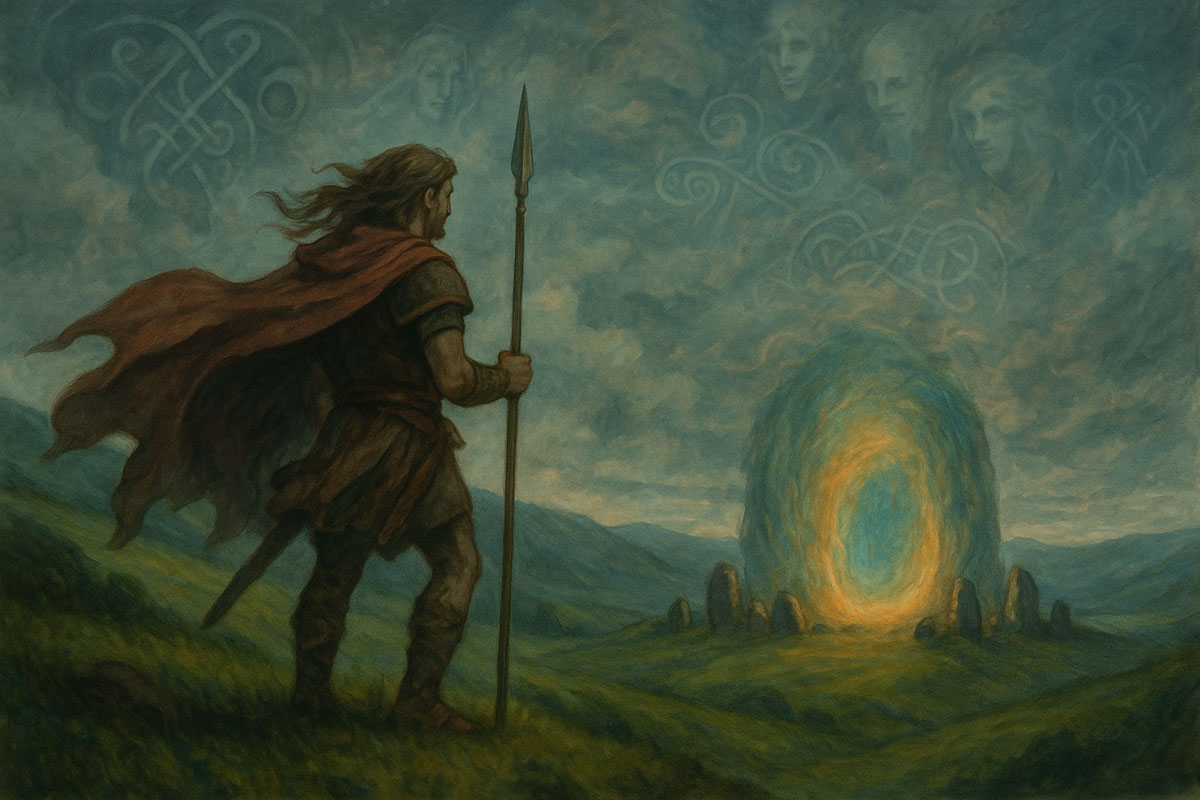
In recent decades, Cú Chulainn’s image has appeared across a wide range of media. Irish artists and authors have revived him in graphic novels, animated shorts, and retellings aimed at younger audiences. Video games have also embraced the legend; characters loosely inspired by him appear in global titles that draw on Celtic themes. His iconic “warp-spasm,” a supernatural transformation in battle, remains one of the most visually striking elements of Irish myth and lends itself naturally to animation and fantasy art.
Modern adaptations explore not only Cú Chulainn’s heroic feats but also the deeper emotional threads of his story—his loyalty to Ulster, his doomed bond with his foster-brother Ferdiad, and the destiny that drives him toward an early death. These themes remain timeless, making him a compelling figure for new generations.
The Tuatha Dé Danann and Magical Ireland in Fantasy Worlds
The magical race known as the Tuatha Dé Danann continues to influence global fantasy lore. Often depicted as godlike beings with supernatural abilities, they ruled Ireland in mythic time before retreating into the Otherworld, later becoming associated with fairies and the Daoine Sídhe.
Many fantasy creators take direct inspiration from this mythology. The idea of a hidden, mystical realm parallel to our own—known as the Sídhe or Fairy Mounds—appears throughout contemporary literature and games. Their stories of battles, enchantments, and magical artifacts (such as the Sword of Nuada or the Stone of Destiny) have influenced role-playing games, epic fantasy series, and modern folklore-inspired fiction.
Characters like Lugh the Long-Armed, Brigid, and the Morrígan continue to appear in reimagined forms: warrior queens, goddesses, mentors, and even modern-day superheroes. Some works keep their names and myths intact, while others adapt them into new worlds, blending Celtic motifs with futuristic or alternate-reality settings.
The Tuatha Dé Danann also contribute to the modern portrayal of Ireland as a land where nature and magic intertwine. Mist-filled valleys, ancient stone circles, and mysterious lakes remain favourite settings for fantasy stories inspired by Irish tradition.
Adaptations in Books, Film, TV, and Gaming
Irish mythology has found a rich home across all major storytelling platforms. In literature, both Irish and international authors reinterpret classic stories, creating accessible retellings and bold new narratives. The works of Lady Gregory, W.B. Yeats, and early folklorists laid the foundation for today’s wave of modern fantasy.
In film and television, Irish studios have taken the lead in bringing mythology to life. The award-winning Secret of Kells and Song of the Sea draw heavily from Celtic lore and present it through enchanting visual styles. These films explore themes of guardianship, spiritual balance, and the relationship between humans and the Otherworld.
Streaming platforms have also embraced Ireland’s mythic landscape. Series featuring druids, fae folk, or myth-inspired warriors often borrow directly from Irish sources, even when the stories are set in fictional worlds. International productions frequently reference banshees, selkies, and fairy tricksters—creatures deeply rooted in Ireland’s storytelling tradition.
Irish mythology is also thriving in the gaming world. Role-playing games like Dungeons & Dragons incorporate Celtic-inspired gods, monsters, and magical items. Independent games created in Ireland draw directly from the Ulster and Mythological Cycles, presenting players with choices and narratives based on ancient lore. Even global franchises have introduced characters or settings inspired by Irish mythology, helping spread these stories to massive audiences.
Why Irish Mythology Still Captivates the Modern Imagination
Irish mythology endures because it blends the mystical with the deeply human. Its heroes are flawed, its gods complex, and its landscapes vividly tied to real places across Ireland. The stories explore universal themes—honour, fate, identity, sacrifice—while remaining grounded in a uniquely Irish worldview.
Modern creators are drawn to these tales because they offer both structure and flexibility. The ancient cycles provide rich frameworks for storytelling, while leaving room for reinterpretation. From dark fantasy to whimsical animation, Irish myth adapts easily to new genres without losing its soul.
For the Irish diaspora, these stories connect them to home; for global audiences, they offer a refreshing alternative to more widely known mythologies like Norse or Greek. As interest in folklore and myth-based fantasy grows, Ireland’s ancient stories continue to inspire new generations of artists, writers, and filmmakers.
Conclusion
From Cú Chulainn’s heroics to the haunting beauty of the Otherworld, Irish mythology remains a vibrant force in modern storytelling. Its influence stretches across books, films, games, and popular culture, proving that the ancient tales of Ireland still carry magic, mystery, and meaning. As new creators rediscover these legends, the myths of Ireland continue to evolve—rooted in history, yet endlessly alive in the imagination.