


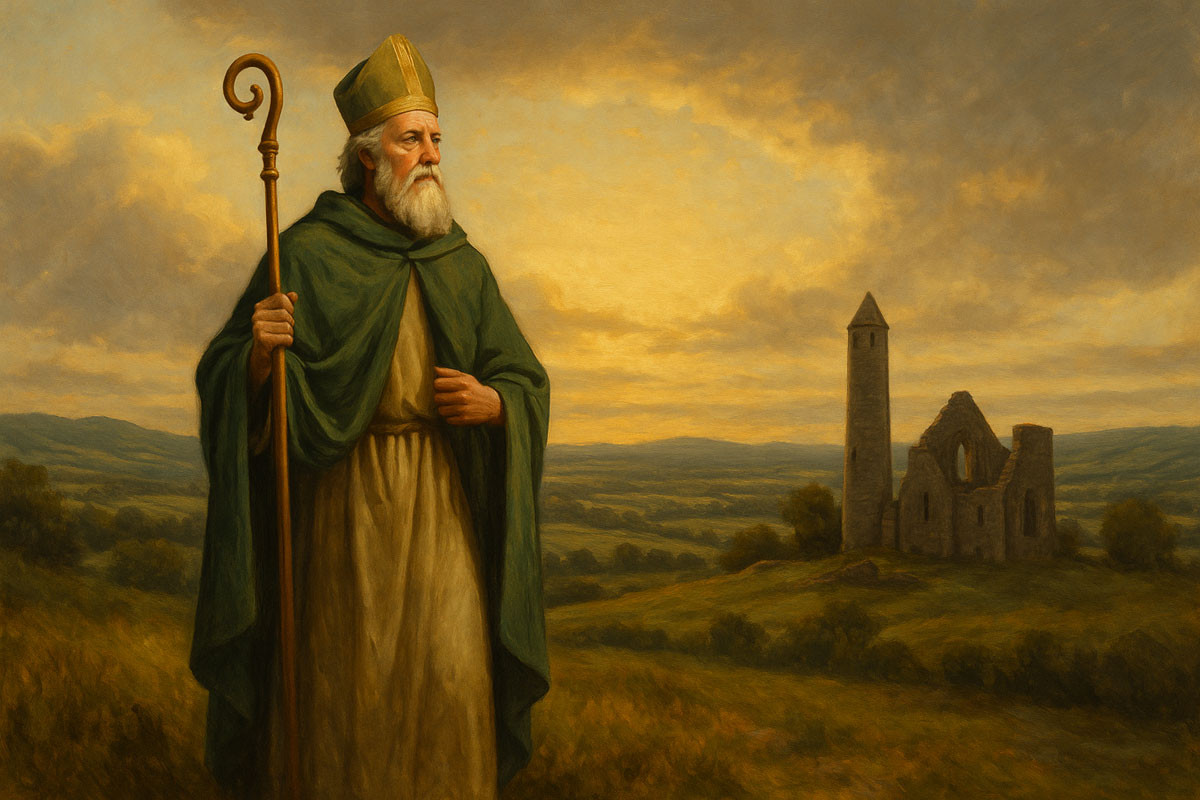

More than a symbol on a holiday or a figure wrapped in legend, St. Patrick stands as one of the most influential individuals in Irish history. His life story—marked by captivity, courage, and spiritual conviction—helped reshape Ireland’s identity and left a legacy that endures across the world.
Table of Contents
- Patrick’s Early Life: Captivity and Calling
- A Mission to Ireland: Preaching, Teaching, and Building Community
- Legends, Symbols, and Stories Surrounding St. Patrick
- St. Patrick’s Enduring Legacy in Ireland and Beyond
Patrick’s Early Life — Captivity and Calling
St. Patrick was not born in Ireland. According to his own writings, he grew up in Roman Britain around the late 4th century. His life took a dramatic turn at age sixteen when Irish raiders captured him and brought him to Ireland as a slave. For six years he worked as a shepherd, enduring isolation, cold, and hunger.
It was during these years of hardship that Patrick’s faith deepened. He prayed constantly, drawing strength from the God he felt guiding him in the wilderness. Eventually, he felt inspired in a dream to escape. Patrick fled his captors, traveled hundreds of miles to a ship, and returned home—traumatized yet spiritually awakened.
But home brought little rest. After reuniting with his family, Patrick began experiencing visions and dreams in which “the voice of the Irish” called him back. Despite his suffering in Ireland, he felt compelled to return—this time not as a slave, but as a missionary. He spent years studying and preparing before he set out again for the land where he once labored in chains.
A Mission to Ireland — Preaching, Teaching, and Building Community
Patrick arrived in Ireland around 432 AD, entering a world organized around clans, tribal kings, and deeply rooted pagan traditions. Unlike many missionaries of his time, Patrick adopted a compassionate and culturally sensitive approach. He did not condemn Irish customs; instead, he communicated the Christian message in ways that respected Ireland’s existing rhythms of life.
Traveling on foot, Patrick moved from community to community, preaching, baptizing, and forming small Christian groups. He founded churches and trained priests, helping new converts build supportive faith communities. His personal courage was legendary—Patrick often faced opposition, threats, and imprisonment, yet he persisted with humility and conviction.
One of his most significant achievements was promoting literacy and learning. By supporting monastic foundations, Patrick helped establish the roots of the monasteries that would later make Ireland a renowned center of scholarship during the early medieval period.
Through persistence and compassion, Patrick helped Christianity spread throughout Ireland within his lifetime. His mission was not one of conquest, but of service—rooted in his belief that he had been called to the very place where he once suffered.
Legends, Symbols, and Stories Surrounding St. Patrick
Over the centuries, Patrick’s story became intertwined with Irish folklore and symbolic imagery. Some of these legends reflect historical truth; others express deeper meanings woven into Irish cultural memory.
The Shamrock
According to tradition, Patrick used the three-leaf shamrock to explain the Christian Trinity—the Father, Son, and Holy Spirit. Whether historically accurate or not, the shamrock has become Ireland’s most recognizable emblem and a symbol of unity, identity, and faith.
Banishing the Snakes
A famous legend claims Patrick drove all the snakes out of Ireland. While Ireland has never had native snake populations, the story symbolizes Patrick’s role in overcoming spiritual or cultural “evils” and ushering in new beliefs.
Miracles and Encounters
Medieval manuscripts recount stories of Patrick calming storms, raising the dead, extinguishing fires, and confronting druids. These tales, whether literal or symbolic, emphasize Patrick’s spiritual authority and the dramatic transformation associated with early Christianity in Ireland.
Croagh Patrick
This sacred mountain in County Mayo is associated with Patrick’s forty days of fasting and prayer, echoing biblical traditions. Today it remains one of Ireland’s most revered pilgrimage sites, drawing thousands each year for the annual Reek Sunday climb.
These legends reveal not simply historical facts but the profound impact Patrick left on the imagination and spirituality of Ireland.
St. Patrick’s Enduring Legacy in Ireland and Beyond
Patrick’s influence extends far beyond the 5th century. His writings, particularly the Confessio and the Letter to Coroticus, give rare insight into the early Irish Church and reveal a man of humility, emotional depth, and fierce conviction.
His legacy shaped Ireland in several lasting ways:
- Christian Identity: Patrick helped transform Ireland from a land of tribal pagan traditions into a flourishing Christian culture.
- Monastic Foundations: His early efforts supported the growth of monasteries that became centers of learning, art, and manuscript production.
- Irish Diaspora: As Irish immigrants spread across the globe, they carried Patrick’s story as a symbol of resilience and faith.
- National Celebration: St. Patrick’s Day, once a solemn religious feast, has become a global celebration of Irish heritage and pride.
In Ireland today, churches, holy wells, mountains, and ancient sites bear Patrick’s name. His influence is present not just in religious traditions but in cultural identity, storytelling, music, and even Ireland’s national iconography.
Patrick’s story resonates because it is ultimately one of transformation—of pain turned into purpose, fear turned into courage, and exile turned into mission. His life embodies some of the deepest themes in Ireland’s spiritual and cultural history.
Conclusion
St. Patrick remains central to Ireland’s heritage because his story combines faith, resilience, and the power of new beginnings. From enslaved shepherd to beloved national patron, he shaped Ireland’s identity in ways still felt today. Whether viewed through history or through legend, Patrick stands as a figure who transformed not only the spiritual landscape of Ireland but the heart of its people.