


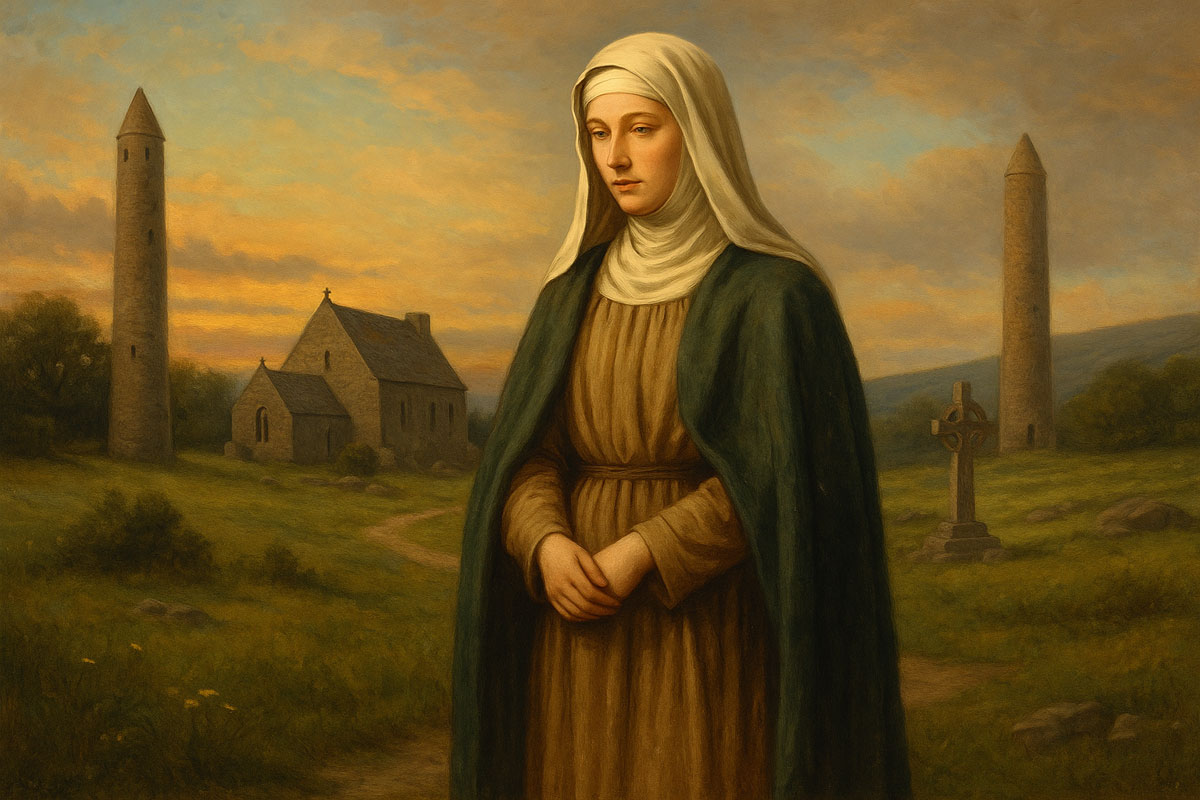

Second only to St. Patrick in fame, St. Brigid of Kildare stands as one of Ireland’s most cherished saints. Known for her compassion, leadership, and legendary miracles, she helped weave the spiritual and cultural fabric of early Christian Ireland. Her life bridges the worlds of faith, folklore, and tradition—making her one of the island’s most enduring symbols of generosity and grace.
Table of Contents
- Brigid’s Early Life: Compassion From the Beginning
- The Monastery of Kildare: A Beacon of Faith and Learning
- Symbols, Miracles, and Legends of St. Brigid
- St. Brigid’s Lasting Legacy in Ireland and Around the World
Brigid’s Early Life — Compassion From the Beginning
St. Brigid was born around the mid-5th century, traditionally in Faughart, County Louth. From childhood she was known for extraordinary generosity. Stories tell of her giving away her father’s possessions—food, clothing, even valuable items—to anyone in need. Though such acts often frustrated her family, they revealed the heart of a woman destined to inspire countless generations.
Brigid’s compassion was paired with deep spiritual longing. She chose a life of Christian devotion and is believed to have taken vows as one of Ireland’s earliest nuns. Her commitment drew followers who recognized in her a rare combination of faith, strength, and leadership.
Many accounts describe her as a woman of striking presence—calm, wise, and unafraid to advocate for justice. Whether dealing with kings, clerics, or common folk, Brigid treated each person with dignity. Her personality helped shape early Irish Christianity into a faith deeply rooted in hospitality and care for the vulnerable.
The Monastery of Kildare — A Beacon of Faith and Learning
Brigid’s greatest earthly legacy is the monastery she founded at Kildare, one of the most important spiritual centers in early medieval Ireland. What made Kildare unique was that it housed both men and women under Brigid’s guidance—a testament to her influence and the respect she commanded.
The settlement became renowned for:
- Hospitality — no traveler was turned away, and Brigid was known for miraculously replenishing food and drink to feed the poor.
- Learning — the monks and nuns of Kildare produced manuscripts, trained future leaders, and contributed to Ireland’s reputation as a center of scholarship.
- Craftsmanship — Kildare was famous for its metalwork, particularly its ornate shrines and church vessels.
- Spiritual leadership — Brigid served as abbess, offering direction with both firmness and kindness.
According to tradition, Brigid maintained a perpetual flame at Kildare—a fire tended by her nuns that symbolized the light of Christ and the constant presence of God. This sacred flame continued to burn for centuries, long after her death.
The original site of Kildare remains a place of pilgrimage today, drawing those who seek inspiration from Brigid’s legacy of warmth and generosity.
Symbols, Miracles, and Legends of St. Brigid
Like many early saints, Brigid’s life is surrounded by stories that blend history with folklore. These tales reveal not just her character, but Ireland’s deep sense of spirituality and imagination.
Brigid’s Cross
The most famous symbol associated with her is the Brigid’s cross, woven from rushes or straw. Tradition says Brigid wove the first cross while comforting a dying pagan chieftain, explaining its meaning as she worked. Today the cross is placed in homes on February 1st—Brigid’s feast day—to invite blessing and protection for the year.
Miracles of Abundance
Stories often portray Brigid as a provider whose compassion multiplied resources. Whether turning water into beer for thirsty travelers or replenishing butter and milk for hungry families, she is remembered as a woman who ensured no one went without.
Mercy and Justice
Brigid was known for intervening on behalf of the poor and oppressed. Legends recount her securing freedom for slaves, protecting vulnerable women, and resolving disputes with wisdom that impressed even kings.
Nature and Peace
Many stories link Brigid to animals, especially cows and sheep, reflecting Ireland’s agrarian life. She is sometimes depicted calming storms, blessing fields, or assisting midwives—roles that connect her to themes of nurturing and renewal.
These stories, whether literal or symbolic, highlight her identity as a saint of care, creativity, and divine generosity.
St. Brigid’s Lasting Legacy in Ireland and Around the World
St. Brigid is one of Ireland’s three principal patron saints, alongside Patrick and Columba. Her influence, however, extends far beyond early medieval Ireland.
In Ireland:
- Churches, wells, and holy sites dedicated to Brigid are found across the country.
- February 1st—Brigid’s Day and the ancient festival of Imbolc—marks the beginning of spring.
- Her flame was symbolically relit in Kildare in 1993 and continues to burn as a reminder of her spiritual warmth.
Globally:
- Irish immigrants carried devotion to Brigid to the Americas, Australia, and beyond.
- Brigid is honored as a patron saint of midwives, poets, scholars, farmers, healers, and the poor.
- Her cross and her values appear in Irish cultural festivals and community celebrations worldwide.
In recent years, Ireland has revived national recognition of Brigid’s importance. Beginning in 2023, the country established a new public holiday in her honor—marking the first Irish holiday named for a woman.
St. Brigid’s legacy remains powerful not because of royal lineage or military triumph, but because of the way she embodied generosity, peace, and inclusive leadership. Her story continues to inspire those who seek compassion in a troubled world.
Conclusion
St. Brigid of Kildare stands as a shining figure in Ireland’s early Christian history—a woman whose life intertwined faith, hospitality, creativity, and courage. She helped shape the spiritual landscape of Ireland not through conquest, but through compassion. Whether remembered through her cross, her flame, or her stories of kindness, Brigid remains a symbol of hope and renewal for people across the world.