



At a time when much of Europe faced instability and decline, Ireland experienced a remarkable flourishing of learning, faith, and artistic achievement. Known as the Monastic Golden Age, this period—spanning roughly from the 5th to the 9th century—saw Irish monasteries become centers of scholarship that helped preserve classical knowledge and shape the intellectual future of Europe.
Table of Contents
- The Arrival of Christianity in Ireland
- The Rise of Monastic Communities
- Scriptoria and the Preservation of Knowledge
- Irish Missionaries and Their Influence Abroad
- The Enduring Legacy of Ireland’s Golden Age
The Arrival of Christianity in Ireland
Christianity reached Ireland in the 5th century, most famously through the mission of St. Patrick. Unlike much of Europe, Ireland had never been part of the Roman Empire, and its transition to Christianity occurred without the collapse of an existing Roman infrastructure.
This unique context allowed the early Irish Church to develop its own character. Rather than large urban cathedrals, Ireland’s Christian life became centered around monasteries—self-contained communities of prayer, study, and daily work.
These monasteries would soon become the backbone of Irish religious and intellectual life.
The Rise of Monastic Communities
From the 6th century onward, monasteries spread rapidly across Ireland. Founded by influential figures such as St. Columba, St. Brigid, and St. Kevin, these communities were often located in remote or rugged landscapes—places that encouraged reflection and separation from worldly distractions.
Monasteries were more than religious centers. They functioned as schools, libraries, places of craftsmanship, and hubs of local life. Within their walls, monks engaged in prayer, farming, teaching, and writing.
Many monasteries grew into significant settlements, with networks that connected Ireland across regions and beyond its shores. Despite their spiritual focus, they played an essential role in shaping Irish society.
Scriptoria and the Preservation of Knowledge
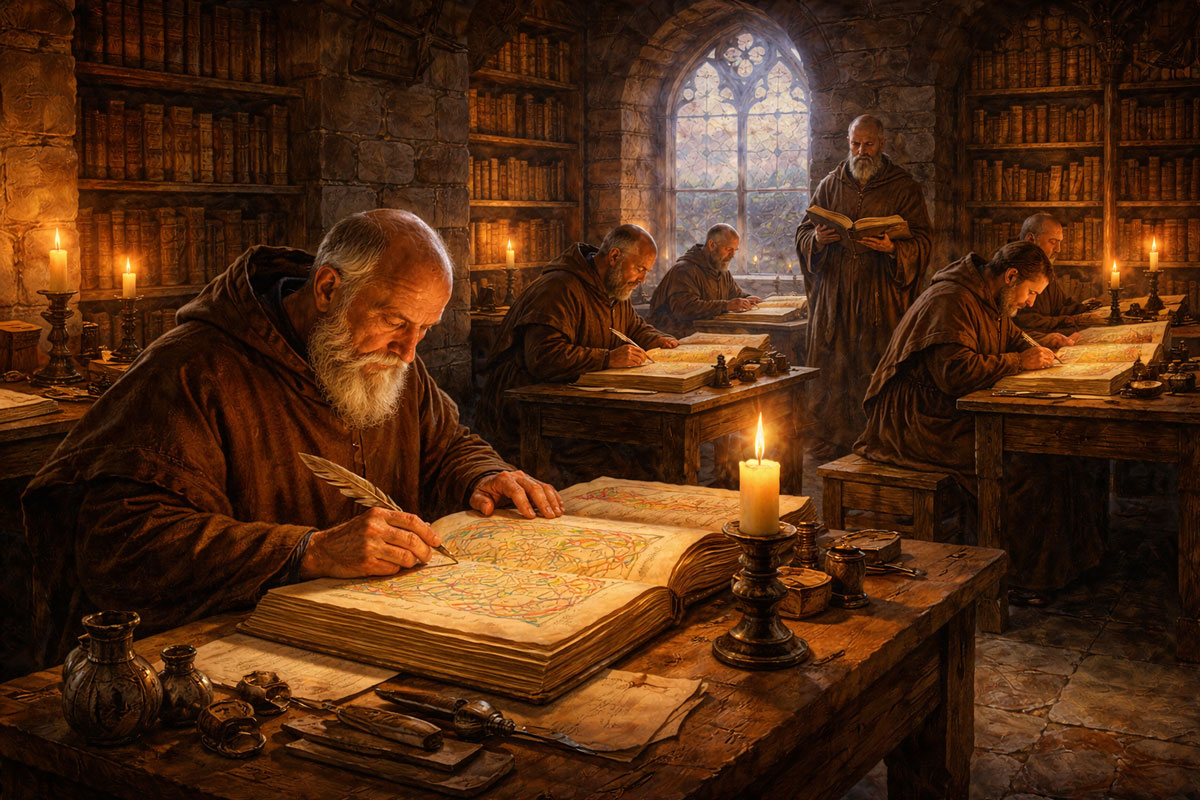
One of the most important contributions of Ireland’s monastic communities was their role in preserving knowledge. Within monasteries, dedicated rooms known as scriptoria became centers of writing and manuscript production.
Monks carefully copied religious texts, including the Bible and writings of the early Church Fathers. In addition, they preserved elements of classical learning—texts from ancient Rome and beyond that might otherwise have been lost during periods of upheaval in continental Europe.
These manuscripts were not only functional but artistic masterpieces. Works such as the Book of Kells and the Lindisfarne Gospels demonstrate extraordinary craftsmanship, blending intricate design with spiritual symbolism.
The act of copying texts was seen as both intellectual work and devotion—a way of honoring God through careful attention and beauty.
Irish Missionaries and Their Influence Abroad
Irish monks did not remain confined to their island. Beginning in the 6th century, many traveled abroad as missionaries, bringing their learning and spiritual practices to Britain and mainland Europe.
Figures such as St. Columbanus established monasteries in regions that are now France, Switzerland, and Italy. These foundations helped revive Christian learning in areas affected by political instability.
Irish scholars became known for their dedication to study and teaching. Their influence extended into the development of European monastic traditions and education systems.
This outward movement of knowledge is sometimes described as Ireland acting as a “beacon of learning” during a time when much of Europe struggled to maintain intellectual continuity.
The Enduring Legacy of Ireland’s Golden Age
The Monastic Golden Age did not last indefinitely. Viking raids beginning in the late 8th century brought disruption to many monastic communities. Some sites were abandoned or destroyed, while others adapted and survived.
Yet the legacy of this period endured. The manuscripts created in Irish monasteries continue to be studied and admired today. The monastic model influenced religious life across Europe, and Ireland’s role in preserving learning remains a defining part of its heritage.
Today, the ruins of monasteries such as Glendalough, Clonmacnoise, and Iona stand as quiet reminders of a time when knowledge was safeguarded in stone buildings and handwritten pages.
Visitors walking these sites can still sense the atmosphere of contemplation and purpose that once defined them.
Conclusion
Ireland’s Monastic Golden Age represents one of the most remarkable chapters in the island’s history. In a time often described as the “Dark Ages,” Irish monasteries became centers of light—preserving knowledge, fostering learning, and shaping the spiritual and intellectual landscape of Europe.
Through dedication, craftsmanship, and faith, generations of monks ensured that ideas, texts, and traditions would endure. Their work continues to influence how we understand both Ireland’s past and Europe’s cultural heritage today.