



Few symbols of Ireland are as recognizable or beloved as the traditional Irish pub. Found in bustling cities, quiet villages, and remote rural crossroads, pubs have long served as gathering places where people come together to share stories, music, conversation, and friendship. While visitors often think of Irish pubs simply as places to enjoy a pint, their role in Irish society extends far beyond food and drink.
For centuries, pubs have functioned as community centers, social hubs, meeting places, and cultural institutions. They have witnessed celebrations, political discussions, family gatherings, and countless ordinary moments that helped shape Irish life. Today, whether located in the heart of Dublin or along a country road in rural Ireland, the Irish pub remains one of the most important and enduring parts of Irish culture.
Table of Contents
- The Origins of the Irish Pub
- How Irish Pubs Evolved
- The Pub as a Community Hub
- Traditional Music and Entertainment
- Storytelling and Conversation
- Rural Pubs and Village Life
- Pubs in Irish Cities
- Traditional Irish Pub Design
- Irish Pubs Around the World
- The Future of the Irish Pub
The Origins of the Irish Pub
The history of Irish pubs stretches back hundreds of years. Taverns and alehouses existed in Ireland long before the modern pub emerged, providing travelers and locals with food, drink, and shelter.
By the seventeenth and eighteenth centuries, licensed public houses had become common throughout Ireland. These establishments offered a place where people could gather, conduct business, discuss local affairs, and socialize with neighbors.
The word “pub” itself comes from “public house,” reflecting its role as a place open to the community. Over time, pubs became woven into the fabric of Irish daily life and developed traditions that remain recognizable today.
Many historic pubs still operating in Ireland trace their origins back centuries, preserving architectural features and customs from earlier generations.
How Irish Pubs Evolved
As Ireland changed, so did its pubs. During the nineteenth century, many public houses expanded beyond serving drinks. They often functioned as general stores, post offices, grocery shops, or meeting places.
In rural areas, a pub might be one of the few public spaces available to local residents. Farmers, merchants, travelers, and laborers all gathered there to exchange news and maintain social connections.
The twentieth century brought further changes as tourism increased and Irish culture gained worldwide popularity. Yet despite modernization, many pubs retained their traditional atmosphere and community-centered role.
Today, Irish pubs range from centuries-old establishments filled with history to modern venues that blend contemporary comforts with traditional hospitality.
The Pub as a Community Hub
One of the defining features of the Irish pub is its role as a gathering place for the community. Unlike bars that focus primarily on entertainment, traditional Irish pubs often serve as social centers where relationships are built and maintained.
People meet friends, celebrate milestones, discuss local events, and share news. Birthdays, anniversaries, sporting victories, and community fundraisers frequently take place within the welcoming atmosphere of the local pub.
In many villages, the pub functions as an informal town square where residents stay connected to one another. This sense of belonging helps explain why pubs occupy such an important place in Irish society.
The emphasis has traditionally been on conversation and companionship rather than simply consuming drinks, creating an environment that encourages social interaction.
Traditional Music and Entertainment
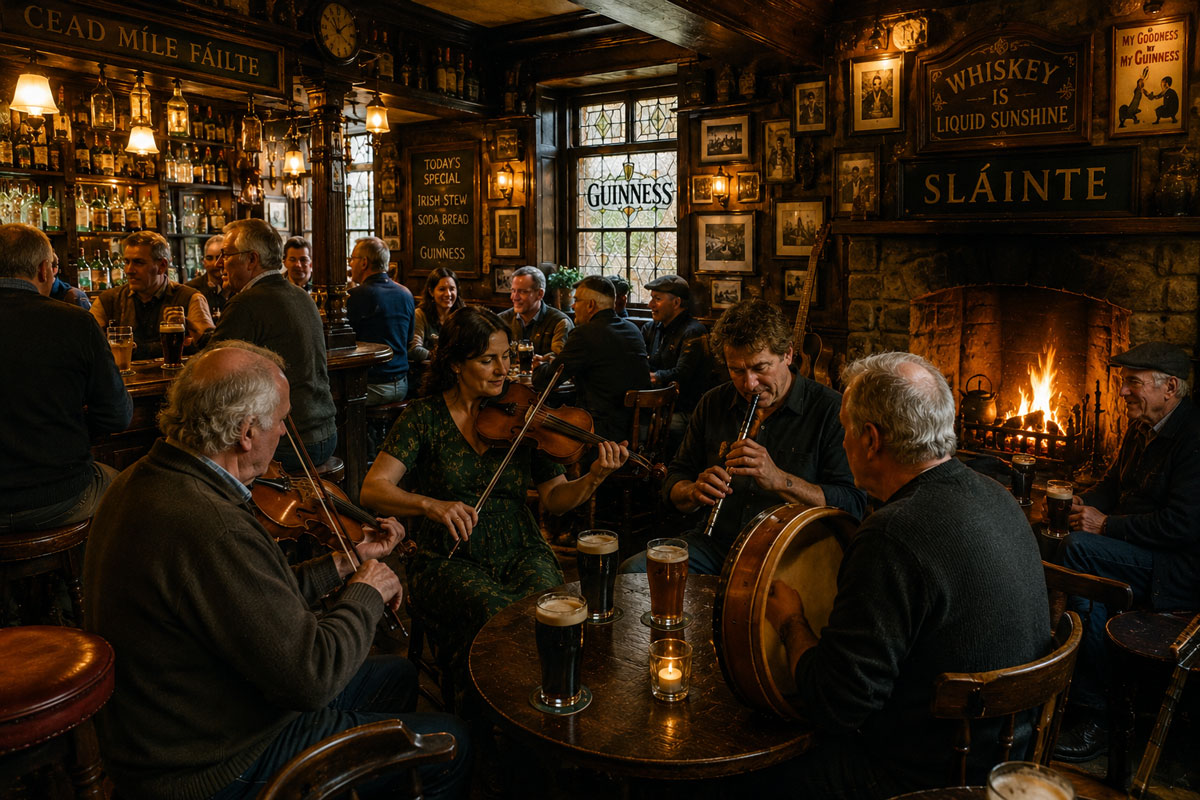
Irish pubs have long been associated with traditional music. Informal music gatherings known as sessions bring together musicians who play jigs, reels, hornpipes, and other traditional tunes.
Instruments commonly heard during sessions include the fiddle, tin whistle, flute, uilleann pipes, accordion, concertina, and bodhrán. Musicians often gather around a table rather than performing on a stage, creating a relaxed and communal atmosphere.
Many visitors consider experiencing a traditional music session to be one of the highlights of visiting Ireland. The combination of skilled musicians, lively tunes, and audience participation creates an unforgettable experience.
Beyond music, pubs have also hosted singing, dancing, poetry, storytelling, and local performances for generations.
Storytelling and Conversation
Storytelling occupies a special place within Irish culture, and pubs have often served as ideal settings for sharing tales and memories.
Historically, people gathered around fires or counters to exchange stories about local characters, historical events, family traditions, and folklore. Humor, wit, and colorful language frequently played important roles in these conversations.
The Irish gift for storytelling has helped preserve countless legends and local histories that might otherwise have been forgotten.
Even today, many visitors discover that some of the most memorable moments in an Irish pub come not from organized entertainment but from spontaneous conversations with locals.
Rural Pubs and Village Life
In rural Ireland, pubs have often served functions that extend well beyond hospitality. They may host community meetings, charity events, sports celebrations, and family gatherings.
For generations, rural pubs provided important social connections in areas where neighbors might live miles apart. Visiting the local pub offered an opportunity to meet friends, discuss farming conditions, and stay informed about community developments.
Many rural pubs maintain a strong sense of tradition and continuity, with some remaining in the same family for multiple generations.
These establishments often preserve a distinctive atmosphere that reflects the character of their local communities.
Pubs in Irish Cities
Urban pubs developed their own unique identities. In cities such as Dublin, Cork, Galway, and Belfast, pubs became gathering places for writers, artists, musicians, politicians, and workers.
Some city pubs earned reputations as intellectual centers where literature, politics, and current events were debated. Others became famous for music, hospitality, or historical significance.
Today, city pubs continue to attract a diverse mix of locals and visitors. While many welcome tourists, they often remain important parts of neighborhood life and community culture.
The variety found within Ireland’s cities ensures that no two pubs are exactly alike.
Traditional Irish Pub Design
Many traditional Irish pubs are known for their warm and inviting interiors. Dark wood furnishings, polished counters, snug seating areas, fireplaces, and historical memorabilia create an atmosphere that encourages people to relax and stay awhile.
Older pubs often contain unique architectural features accumulated over generations. Photographs, sporting memorabilia, musical instruments, and local artifacts frequently adorn the walls.
The famous Irish “snug,” a small semi-private seating area, became popular during the nineteenth century and can still be found in some historic establishments.
These design elements help create the distinctive charm that people around the world associate with authentic Irish pubs.
Irish Pubs Around the World
The popularity of Irish culture has led to the spread of Irish pubs across the globe. Today, Irish-style pubs can be found throughout Europe, North America, Australia, Asia, and beyond.
Many seek to recreate the atmosphere of a traditional Irish public house through architecture, music, food, and hospitality. While experiences vary, these establishments help introduce aspects of Irish culture to international audiences.
For members of the Irish diaspora, Irish pubs often provide a connection to heritage and tradition far from home.
The global success of Irish pubs demonstrates the universal appeal of their welcoming and community-focused spirit.
The Future of the Irish Pub
Like many long-standing institutions, Irish pubs face challenges and opportunities in a changing world. Shifts in demographics, tourism patterns, and social habits have influenced the industry in recent decades.
Nevertheless, the core strengths of the Irish pub remain unchanged. People continue to seek places where they can gather, connect, and share experiences with others.
Many pubs have adapted by offering food, cultural events, live music, and family-friendly environments while preserving traditional values of hospitality and community.
As Ireland continues to evolve, its pubs remain important cultural landmarks. More than places to eat or drink, they are living institutions that reflect the history, character, and social traditions of the Irish people.
The Irish pub endures because it offers something timeless: a welcoming space where conversation, music, friendship, and community come together under one roof.