



The Irish wake is one of the most distinctive and deeply rooted traditions in Irish culture. Neither purely solemn nor irreverent, it blends grief with storytelling, prayer, music, and even laughter. For centuries, the wake has served as a way for communities to mourn the dead while celebrating a life lived—binding families and neighbors together at a moment of profound transition.
Table of Contents
- Origins of the Irish Wake
- The Wake at Home: Vigil, Prayer, and Community
- Traditions, Symbols, and Rituals
- Storytelling, Music, and Celebration of Life
- The Irish Wake in Modern Ireland
Origins of the Irish Wake
The tradition of the Irish wake stretches back to ancient times, shaped by both pre-Christian beliefs and later Christian practices. Long before formal funerals, death was seen as a moment when the boundary between worlds became thin—a time when the living and the dead briefly shared the same space.
In early Irish belief, it was important that the deceased was never left alone. The wake ensured companionship, protection, and respect during the soul’s transition. This vigil helped guard against evil spirits, fairies, or restless forces that were believed to linger at moments of death.
With the arrival of Christianity, prayers, rosaries, and blessings became central elements of the wake. Yet older customs endured, creating a uniquely Irish blend of sacred ritual and communal expression.
The very word “wake” reflects this practice—the body was watched over, or “waked,” by family and neighbors until burial.
The Wake at Home — Vigil, Prayer, and Community
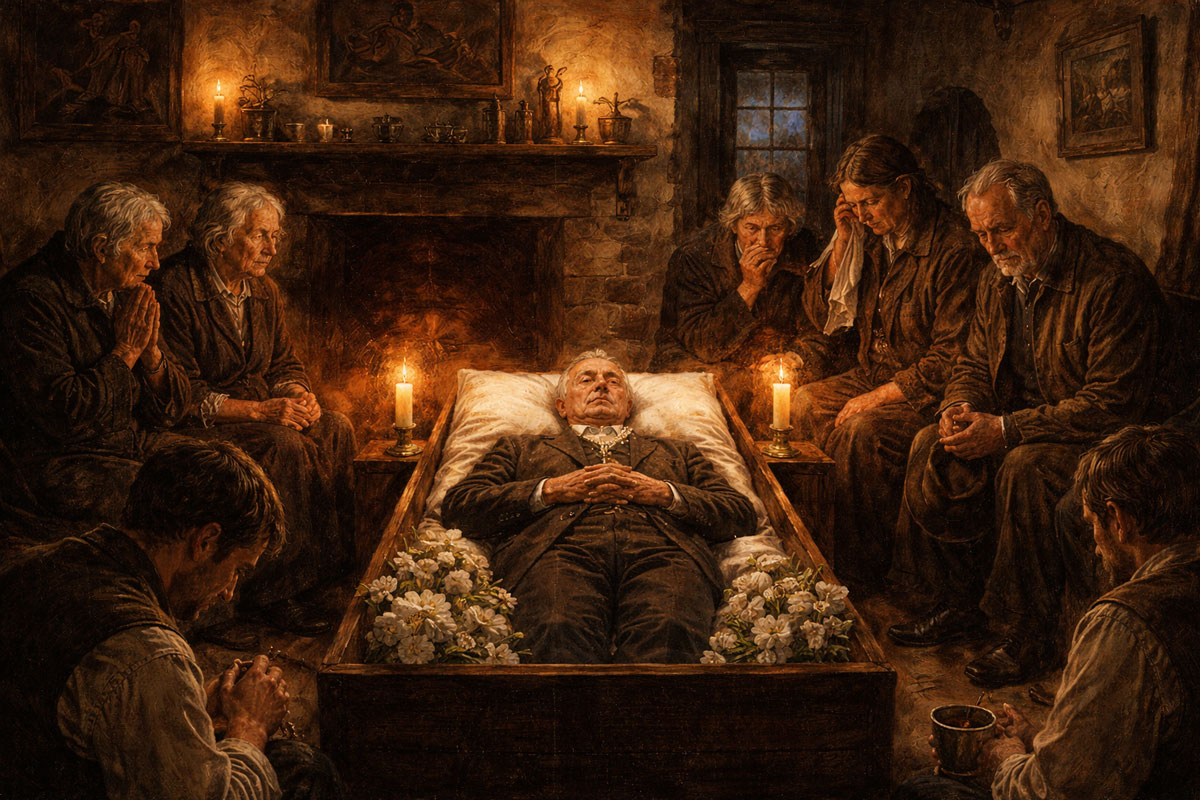
Traditionally, the Irish wake took place in the home of the deceased. The body was laid out in the main room, often on a table or bed, surrounded by candles, holy images, and flowers. Mirrors were covered, clocks stopped, and the house prepared as a place of quiet reverence.
Neighbors arrived throughout the day and night, offering condolences, food, and companionship. No invitation was required—the wake belonged to the community as much as to the family. This shared presence helped ease grief and ensured that no one mourned alone.
Prayer played an important role. The rosary was often recited several times during the wake, led by a respected community member. Moments of silence alternated with spoken prayer, creating a rhythm that allowed both reflection and connection.
Hospitality was essential. Tea, bread, sandwiches, and sometimes stronger drink were offered freely. Refusing refreshment was considered impolite, as sharing food symbolized solidarity and care.
Traditions, Symbols, and Rituals
The Irish wake is rich in symbolism, much of it rooted in centuries-old beliefs.
Candles and Light
Candles were placed near the body to guide the soul and symbolize hope beyond death. The soft glow reinforced the sacred atmosphere of the vigil.
Keening
In earlier times, some wakes included keening—a form of vocal lament performed by women. This emotional expression of grief allowed sorrow to be voiced openly and collectively.
Objects of the Deceased
Personal items such as rosary beads, tools, or religious medals were often placed near the body, representing the life and identity of the person who had died.
Protection and Respect
Superstitions once dictated how the body should be handled, who should touch it, and what should or should not be done in the house. These customs reflected a deep respect for the dead and a belief in unseen forces.
While some of these practices have faded, their influence remains woven into Irish attitudes toward death and remembrance.
Storytelling, Music, and Celebration of Life
Perhaps the most distinctive feature of the Irish wake is its balance between mourning and celebration. While grief was openly acknowledged, so too was joy—especially joy rooted in memory.
Stories were shared late into the night. Tales of childhood, courtship, mischief, and kindness painted a fuller picture of the person who had died. Laughter was not only permitted but welcomed, viewed as a sign that life continued.
Music sometimes emerged organically. A fiddle tune, a slow ballad, or a familiar song could surface, offering comfort through shared tradition. These moments reinforced the idea that death did not erase belonging.
This blending of sorrow and celebration reflects a distinctly Irish understanding of mortality: death is a profound loss, but it is also part of the wider human journey. The wake allowed space for both tears and smiles, honoring the fullness of a life.
The Irish Wake in Modern Ireland
In modern Ireland, many aspects of the traditional wake have changed. Funeral homes now host many vigils, and practices are often shorter and more structured. Yet the spirit of the wake endures.
Family gatherings, storytelling, prayer, and communal support remain central. Even in contemporary settings, the wake continues to emphasize presence—showing up for one another at moments of loss.
Among the Irish diaspora, the wake holds powerful emotional significance. For many families abroad, recreating elements of the wake serves as a way to maintain cultural connection and honor ancestral traditions.
Whether held in a farmhouse kitchen, a modern funeral home, or a community hall, the Irish wake continues to express values of compassion, remembrance, and shared humanity.
Conclusion
The Irish wake stands as one of Ireland’s most meaningful customs—a ritual that transforms grief into connection and loss into remembrance. Rooted in ancient belief and shaped by centuries of faith and community life, it reflects a deep understanding of death as part of the human story.
By bringing people together to pray, share stories, and celebrate a life, the wake affirms that no one departs this world alone—and that memory, love, and belonging endure beyond the final farewell.