




Table of Contents
- Why Heritage Conservation Matters
- Methods and Materials: Conserving Stone, Wood, and Art
- Modern Challenges and Climate Threats
- Community Involvement and Sustainable Tourism
Why Heritage Conservation Matters
From ancient passage tombs and monastic round towers to Norman castles and Georgian townhouses, Ireland’s historic landscape is a patchwork of the past made present. But time, weather, and human activity all take their toll. Without dedicated conservation efforts, many of Ireland’s most iconic landmarks would be at risk of decay or permanent loss. This is where heritage conservation plays a critical role — not just in maintaining structures, but in safeguarding the spirit of Ireland itself.
Heritage conservation involves more than patching up old walls or replacing roof tiles. It is a multidisciplinary effort that draws from archaeology, architecture, material science, ecology, and community planning. At its heart lies the belief that the built and cultural heritage of a nation holds irreplaceable value — and that protecting these sites helps future generations connect with their history, identity, and sense of place.
Organizations like the Heritage Council of Ireland and the Office of Public Works (OPW) have led the way in promoting conservation policies, funding restoration projects, and educating the public. Through initiatives such as the “Built Heritage Investment Scheme” and “Historic Structures Fund,” they support the care and repair of protected structures across every county in Ireland — from remote thatched cottages in Mayo to medieval cathedrals in Kilkenny.
Conservation also respects the unique characteristics of each site. For example, lime mortar is often used in restoring medieval stonework, not only for authenticity but because modern cement can cause damage. Preserving authenticity means working slowly, respectfully, and with deep historical knowledge. It’s a process that takes time — and patience — but the rewards are enduring.
Ultimately, heritage conservation is not about freezing Ireland in the past. It is about enabling a living connection to continue — where ancient ruins become places of learning, pilgrimage, and pride.
Methods and Materials: Conserving Stone, Wood, and Art
When it comes to conserving heritage sites in Ireland, one size never fits all. The materials used to build a sixth-century monastery differ greatly from those in an 18th-century townhouse or a rural stone bridge. Effective conservation requires not only technical skill but also an intimate knowledge of traditional building methods, natural materials, and the historical context of each site.
Stone conservation is a central focus in Ireland, given the abundance of dry-stone walls, medieval towers, and limestone structures. Over time, exposure to wind, rain, and freeze-thaw cycles leads to erosion and cracking. Conservationists carefully assess each structure’s needs, often using traditional lime mortar instead of Portland cement. Lime is breathable, flexible, and historically accurate — allowing stone walls to expand and contract without trapping moisture.
Wooden elements, such as beams, staircases, and roof supports, present another set of challenges. In heritage conservation, repair is always preferred over replacement. Craftspeople often use seasoned timber of the same species and age profile to maintain integrity. Techniques like scarf joints and wooden pegs are employed to blend restoration seamlessly with original workmanship.
Preserving art and interior elements — such as stained glass windows, religious iconography, frescoes, and plasterwork — is equally vital. Conservators use gentle, reversible methods that avoid chemical damage or over-restoration. For example, pigment from medieval wall paintings in Irish abbeys may be consolidated with delicate organic binders under microscopes to ensure minimal disturbance.
Technology has also become an ally. Laser scanning, 3D modeling, and thermal imaging help experts document and diagnose structural issues before intervention begins. Drones can now assess inaccessible roofs or ruins without disturbing delicate features. Meanwhile, archival research provides clues about the original appearance and construction phases of buildings, guiding accurate restoration.
Across Ireland, training in these conservation methods is growing. Initiatives like the Traditional Building Skills Register and Heritage Contractors Register are helping revive endangered crafts and ensure high standards. These efforts make it possible to preserve not just structures, but also the cultural memory embedded in the way they were built.
Modern Challenges and Climate Threats
While traditional techniques and historic materials are key to conserving Ireland’s heritage, today’s challenges require forward-thinking solutions. The historic environment is under increasing pressure — not just from age and neglect, but from modern development, visitor impact, and the accelerating effects of climate change. Conservation is no longer only about restoration; it’s also about resilience.
Urban development can be one of the most immediate threats to heritage. In fast-growing cities like Dublin, Cork, and Galway, protected buildings and archaeological sites are often surrounded by construction zones or altered by incompatible renovations. Planning authorities now rely heavily on conservation reports, archaeological impact assessments, and heritage-led design to ensure that development enhances rather than erases the past.
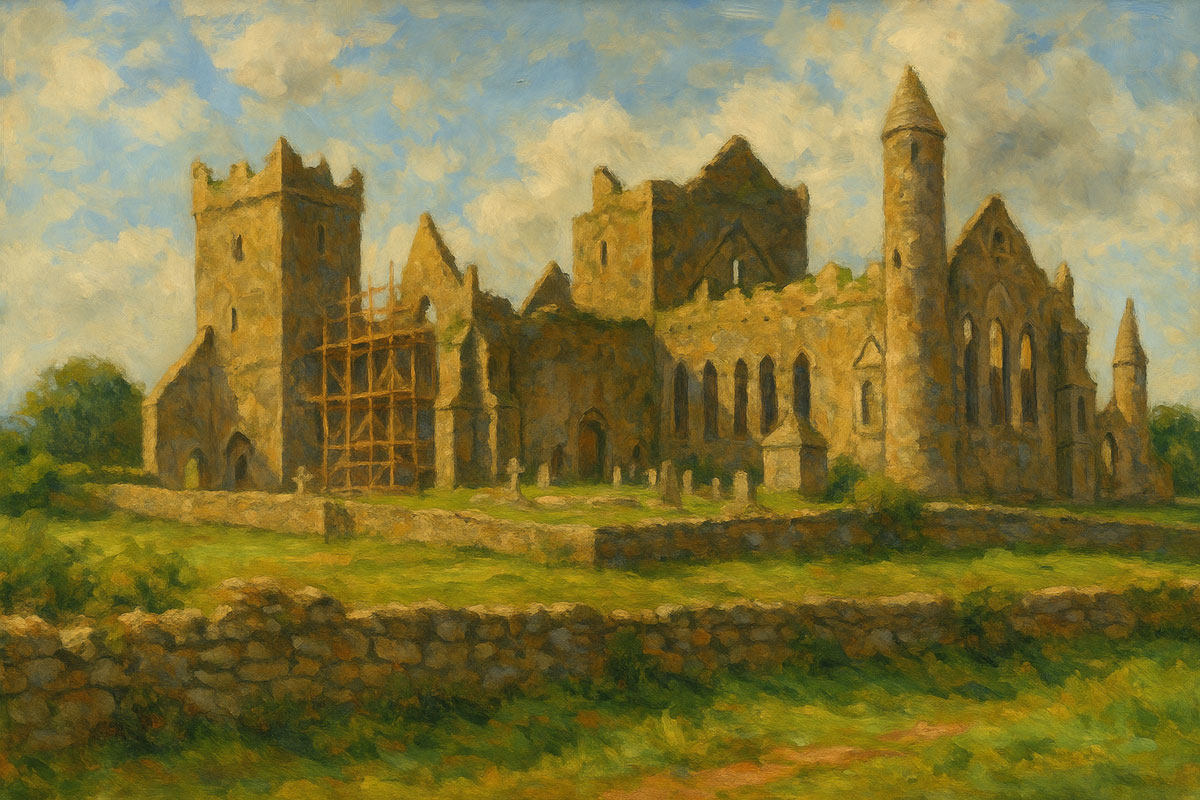
Tourism, while economically vital, can also put strain on historic sites. Iconic destinations like the Rock of Cashel, Newgrange, and the Cliffs of Moher receive hundreds of thousands of visitors annually. Foot traffic, erosion, and overcrowding can damage fragile structures and ecosystems. Conservation efforts increasingly focus on sustainable tourism practices — including guided access, timed entries, and educational signage — to balance preservation with accessibility.
Perhaps the greatest long-term threat is climate change. Rising sea levels pose a danger to coastal forts and cliffside ruins. Increased rainfall and storm events accelerate masonry decay and flooding in low-lying heritage towns. Warmer winters bring new fungal and insect threats to wooden interiors, while longer growing seasons allow ivy and other invasive vegetation to overtake stonework more quickly.
To address these realities, Irish conservationists are now incorporating climate risk assessments into heritage planning. The National Monuments Service and the Climate Change Sectoral Adaptation Plan for Built and Archaeological Heritage are working to identify vulnerable sites and prioritize preventative action. From improved drainage systems to climate-resilient materials, adaptation is becoming as crucial as restoration.
Public engagement also plays a key role. When local communities understand what’s at stake — and feel empowered to help — conservation becomes a shared responsibility.
Community Involvement and Sustainable Tourism
Protecting Ireland’s heritage is not the work of specialists alone — it is a nationwide effort that depends on the support and participation of communities, visitors, and future generations. Conservation thrives when local people feel a sense of ownership over the places that define their history. From village-led restoration projects to eco-conscious tourism initiatives, grassroots involvement is one of the most powerful tools for preserving the past.
Across Ireland, community groups, historical societies, and volunteers are actively engaged in maintaining and celebrating local heritage. Projects supported by the Heritage Council and the National Inventory of Architectural Heritage often begin at the local level — whether it’s restoring a famine-era workhouse, conserving a traditional stone wall, or researching the history of an old mill.
One excellent example is the “Adopt a Monument” scheme, which encourages communities to take an active role in caring for archaeological sites in their area. These projects not only preserve physical structures but also reconnect people with their stories, customs, and environment. Schools, artists, and local historians often collaborate to create events, signage, or oral history collections that enrich both education and tourism.
Speaking of tourism, the shift toward sustainable and culturally aware travel is transforming how visitors interact with Ireland’s heritage. Green tourism operators now highlight lesser-known sites to relieve pressure on famous landmarks, while supporting rural economies. Initiatives like the Wild Atlantic Way and Ireland’s Ancient East help spread tourism more evenly across the country, promoting discovery without overcrowding.
Technology also helps. Audio guides, virtual tours, and QR-code-linked signage allow visitors to learn about sites without the need for intrusive infrastructure. Heritage trails, eco-friendly transport, and Leave No Trace principles all contribute to a more respectful visitor experience.
In the end, protecting Ireland’s past is about connection — between old stones and living stories, between national agencies and small-town volunteers, and between the footsteps of the past and the path forward. When communities care for heritage, they are not only preserving buildings, but anchoring Ireland’s soul for generations to come.