


Long before Ireland became known as the “Land of Saints and Scholars,” holy men and women walked its valleys, founded monasteries, built learning centers, and spread a faith that would shape the island for centuries. Their stories blend history, legend, devotion, and the cultural spirit that still defines Ireland today.
Table of Contents
- St. Patrick: The Missionary Who Transformed a Nation
- St. Brigid of Kildare: Mother of Monastic Ireland
- St. Columba of Iona: Exile, Scholar, and Peacemaker
- Other Early Saints Who Shaped Irish Faith
St. Patrick — The Missionary Who Transformed a Nation
St. Patrick is the most widely known of Ireland’s saints, yet his early life was marked by hardship. Born in Roman Britain, he was kidnapped as a teenager and brought to Ireland as a slave. During his years tending sheep on the hillsides, Patrick discovered a deep faith that sustained him until he escaped and returned home.
But Patrick felt called back to Ireland—not as a captive, but as a missionary. When he returned, he preached a message of forgiveness, faith, and dignity for all people. His courage helped spread Christianity throughout the island, but what made him truly influential was his respect for local culture. Instead of destroying existing traditions, Patrick often adapted them, allowing Christian and Irish customs to grow side by side.
Patrick founded churches, ordained priests, and traveled tireless miles across the countryside. Sites like Croagh Patrick and Armagh still preserve his legacy. His writings, including the Confessio, reveal humility and unwavering trust in God.
Today, Patrick remains a symbol of resilience and transformation—someone who turned suffering into mission and helped shape Ireland’s spiritual identity.
St. Brigid of Kildare — Mother of Monastic Ireland
St. Brigid is often called “Mary of the Gael,” a title that reflects her extraordinary compassion and leadership. Born around the mid-5th century, Brigid was known for her generosity even as a young girl, giving food and possessions to the poor.
Brigid founded her most famous monastery in Kildare, a place that became a center of faith, learning, and hospitality. The site housed both men and women under her guidance, unusual for the time and a testament to her influence. Her abbey became known for its craftsmanship, illuminated manuscripts, and a flame said to symbolize the light of Christ.
Many legends surround Brigid—miracles of healing, protection, and abundance—which reflect her role as a spiritual mother to the Irish people. Her symbol, the woven Brigid’s cross, remains one of Ireland’s most recognizable cultural icons.
Brigid stands out not only as a saint, but as a bridge between Ireland’s pre-Christian past and Christian future.
St. Columba of Iona — Exile, Scholar, and Peacemaker
St. Columba, or Colmcille, was a scholar, monk, and eventually an exile. Born in County Donegal into a noble family, he was trained in the monastic schools that were flourishing across Ireland. His early life was marked by controversy—tradition tells of a dispute over a copied manuscript that led to conflict and regret.
Seeking repentance and renewal, Columba left Ireland with twelve companions and sailed to the Isle of Iona, off the coast of Scotland. There he founded one of the most significant monasteries in early Christian Europe. Iona became a beacon of faith, sending missionaries across Scotland and preserving sacred learning.
Columba was known for his poetry, his deep love of Scripture, and his efforts to bring peace to divided clans. His life reveals a man who embraced exile not as punishment, but as a chance to serve others.
He is remembered as a patron of poets, exiles, and those seeking reconciliation.
Other Early Saints Who Shaped Irish Faith
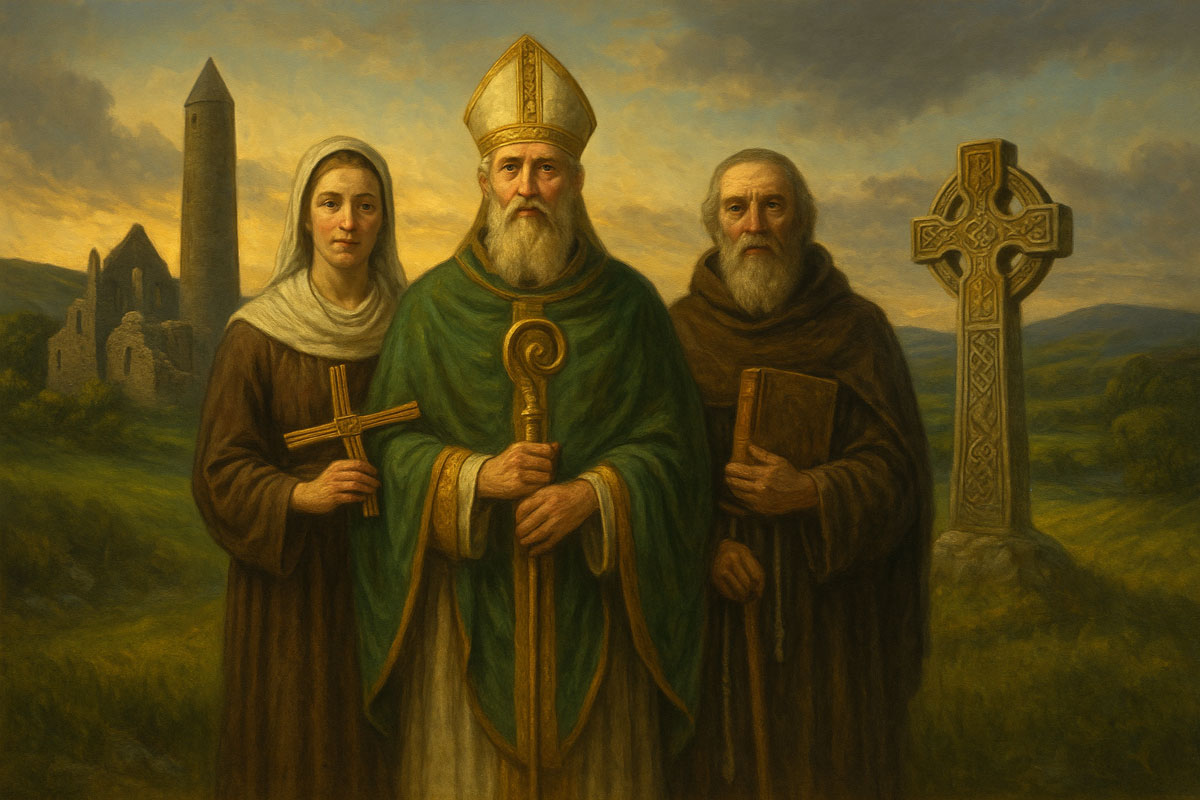
Ireland’s early Christian era produced a remarkable number of saints whose stories continue to shape culture, art, and spirituality. While Patrick, Brigid, and Columba form Ireland’s “great triad,” many others contributed greatly to the island’s identity.
St. Kevin of Glendalough
Founder of the monastery at Glendalough, Kevin lived as a hermit before attracting followers who built one of Ireland’s most beautiful monastic settlements. His love of solitude, nature, and prayer is woven into countless stories and poems.
St. Cormac mac Cuilennáin
A bishop-king known for wisdom, leadership, and learning. His life reflects Ireland’s unique blend of spiritual and civic leadership during the early medieval period.
St. Ita of Killeedy
Often called the “Brigid of Munster,” Ita founded a community for women and was revered for her gentle wisdom. She served as spiritual guide to many young saints, including St. Brendan the Navigator.
St. Brendan the Navigator
Famed for his legendary sea voyage, Brendan symbolizes exploration and spiritual adventure. His story inspired medieval maps and countless retellings across Europe.
St. Finian of Clonard
The teacher of the “Twelve Apostles of Ireland,” Finian trained many of the country’s most influential early monks. His monastery at Clonard became a powerhouse of learning and missionary work.
Together, these saints created the spiritual and intellectual foundations that earned Ireland the title “Island of Saints and Scholars.” Their monasteries preserved Scripture, nurtured poetry and art, and helped spread Christianity across Europe.
Conclusion
The saints of early Ireland were more than historical figures—they were builders of community, protectors of learning, and keepers of compassion. Their influence shaped not only the Irish Church, but the culture and identity of the island itself. Through monastic settlements, missionary work, and lives of service, these holy men and women lit a flame that still shines in Ireland’s spiritual heritage today.