



Every March 17th, Ireland turns green—not just in color, but in spirit. While St. Patrick’s Day is celebrated around the world with parades and festivities, its roots in Ireland run far deeper than shamrocks and celebrations. Behind the music and pageantry lies a story of faith, national identity, and cultural resilience stretching back over 1,500 years.
Table of Contents
- Who Was St. Patrick?
- The Early Religious Feast Day
- The Rise of Parades and Public Celebration
- Symbols of St. Patrick’s Day
- How Ireland Celebrates Today
Who Was St. Patrick?
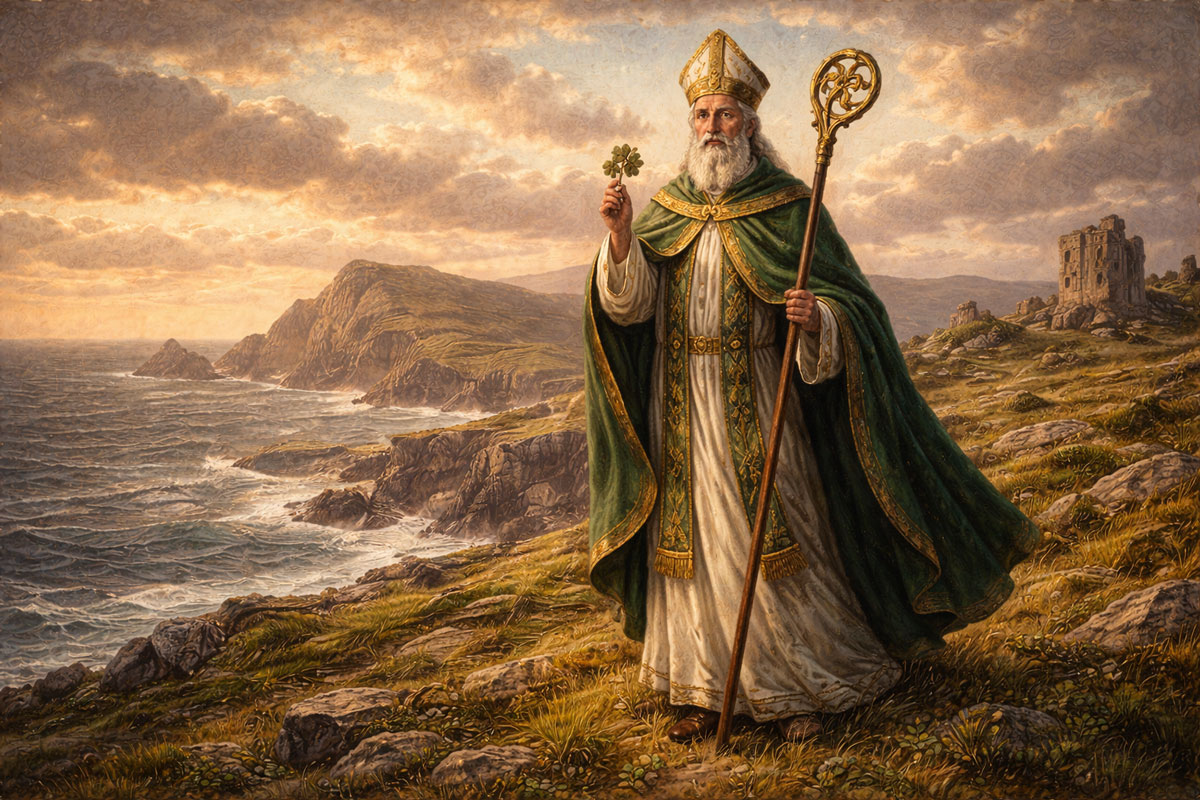
St. Patrick, Ireland’s patron saint, was not Irish by birth. Born in Roman Britain in the late 4th century, he was captured by Irish raiders as a teenager and brought to Ireland as a slave. During six years of captivity, he worked as a shepherd and deepened his Christian faith.
After escaping and returning home, Patrick later felt called to return to Ireland—not as a captive, but as a missionary. His work in the 5th century helped establish Christianity across the island.
Though many legends surround him—most famously the story of banishing snakes from Ireland—his historical legacy is tied to spreading Christian belief and establishing early church communities.
St. Patrick’s feast day, March 17th, is traditionally believed to mark the date of his death.
The Early Religious Feast Day
For centuries, St. Patrick’s Day in Ireland was primarily a religious occasion. It was a holy day of obligation in the Catholic Church, marked by Mass and prayer rather than public celebration.
Families attended church in the morning and gathered afterward for modest meals. During the Lenten season, certain restrictions were traditionally lifted on March 17th, allowing for a small celebration within a religious framework.
The focus remained on Patrick’s spiritual legacy rather than national spectacle.
The Rise of Parades and Public Celebration
Interestingly, the large public parades often associated with St. Patrick’s Day began outside Ireland, particularly among Irish communities in the United States.
By the 19th and early 20th centuries, Irish emigrants used St. Patrick’s Day as a way to celebrate identity and heritage abroad. Over time, Ireland adopted elements of this public celebration.
The modern Dublin St. Patrick’s Festival, established in the 1990s, transformed the holiday into a multi-day cultural event featuring music, performance, and international visitors.
Today, cities and towns across Ireland host parades that blend tradition with contemporary creativity.
Symbols of St. Patrick’s Day
Several symbols are closely associated with St. Patrick’s Day:
The Shamrock
Legend holds that Patrick used the three-leafed shamrock to explain the concept of the Holy Trinity. Whether literal or symbolic, the shamrock became Ireland’s national emblem.
The Color Green
Though blue was once associated with St. Patrick, green became linked to Irish nationalism and landscape imagery. Today it dominates celebrations worldwide.
Croagh Patrick
Pilgrimage to Croagh Patrick in County Mayo reflects the saint’s spiritual legacy. The mountain remains one of Ireland’s most sacred sites.
Music and Language
Traditional Irish music, dance, and the Irish language often feature prominently in modern celebrations.
How Ireland Celebrates Today
In contemporary Ireland, St. Patrick’s Day balances faith, culture, and tourism. Morning church services continue in many communities, especially in rural areas.
Parades range from small village gatherings to large-scale city events. Traditional music sessions fill pubs, while families gather for meals and community events.
Beyond Ireland, landmarks across the globe are illuminated in green as part of the “Global Greening” initiative, reinforcing Ireland’s international cultural presence.
Yet beneath the spectacle remains a quieter heritage: a day that began as remembrance of a missionary who changed Ireland’s spiritual landscape.
Conclusion
St. Patrick’s Day in Ireland is more than a festival—it is a reflection of history, faith, and evolving national identity. From its origins as a solemn feast day to its transformation into a global celebration, March 17th continues to unite tradition and modernity.
Whether marked by pilgrimage, parade, or quiet reflection, the day remains rooted in a story over fifteen centuries old—one that continues to shape Ireland’s heritage each spring.