



Music has long been at the heart of Irish life. For thousands of years, songs, melodies, and traditional tunes have accompanied celebrations, mourned losses, preserved history, and strengthened communities. Long before many stories were written down, they were remembered through music, allowing Ireland’s heritage to be passed from one generation to the next.
Today, Irish music is recognized around the world, from lively pub sessions and traditional dances to internationally acclaimed musicians and festivals. Yet its greatest importance lies not in entertainment alone, but in its enduring role as a symbol of Irish identity. Through periods of invasion, famine, emigration, and independence, music has remained one of Ireland’s strongest cultural threads.
Table of Contents
- Ancient Beginnings
- The Age of the Irish Harpers
- Preserving History Through Song
- Dance Music and Community Life
- Music During Times of Hardship
- The Irish Diaspora and Global Influence
- The Revival of Traditional Irish Music
- The Tradition of the Irish Session
- Irish Music Today
- Why Music Remains Central to Irish Identity
Ancient Beginnings
The roots of Irish music stretch back to prehistoric times. Although no written records survive from Ireland’s earliest inhabitants, archaeologists have discovered ancient horns, whistles, and other instruments dating back thousands of years.
The arrival of the Celts brought a rich oral tradition in which music, poetry, and storytelling became closely connected. Bards composed songs that celebrated heroes, remembered important events, and honored local rulers. These performances helped preserve Ireland’s history long before widespread literacy.
Music was woven into everyday life, accompanying seasonal festivals, religious ceremonies, feasts, and gatherings throughout ancient Ireland.
The Age of the Irish Harpers
Few instruments are more closely associated with Ireland than the harp. By the medieval period, professional harpers occupied respected positions within Gaelic society.
Irish harpers performed for kings, chieftains, and noble families, entertaining audiences while also preserving family histories and important traditions through music.
The harp became such a powerful symbol of Ireland that it eventually appeared on official seals, coins, passports, and government emblems. It remains the national symbol of Ireland today.
Although the old Gaelic order declined in later centuries, the legacy of the Irish harpers continues to influence traditional music and Irish cultural identity.
Preserving History Through Song
For generations, songs served as living history books. Ballads recorded victories, defeats, romances, emigration, political struggles, and local events that might otherwise have been forgotten.
Because songs were easy to remember, they allowed stories to travel from village to village and survive across generations. Many well-known Irish ballads still performed today tell stories that originated hundreds of years ago.
These songs connected communities with their past while reinforcing shared values, memories, and traditions.
Even today, traditional ballads continue to preserve important chapters of Irish history through music.
Dance Music and Community Life
Music has always played an important role in Irish social gatherings. Reels, jigs, hornpipes, polkas, and slides became the soundtrack for dances held in homes, crossroads, parish halls, and village gatherings.
Traditional dances provided opportunities for people to celebrate, socialize, and strengthen community bonds. Musicians often played from memory, passing tunes from one generation to the next without written notation.
Many of these melodies remain remarkably unchanged today and continue to be played during festivals and traditional music sessions throughout Ireland.
The lively rhythms of Irish dance music remain among the country’s most recognizable cultural traditions.
Music During Times of Hardship
Irish music has often provided comfort during periods of hardship. During times of political conflict, economic struggle, and emigration, songs helped express emotions that words alone sometimes could not.
The Great Famine of the 1840s inspired numerous songs reflecting grief, resilience, and hope. Similarly, songs connected with emigration allowed Irish communities abroad to maintain emotional ties with their homeland.
Music also played a role in preserving cultural identity during periods when Irish language and traditions faced significant challenges.
These songs remind listeners not only of difficult chapters in Irish history but also of the strength and perseverance of the Irish people.
The Irish Diaspora and Global Influence
As millions of Irish emigrated around the world, they carried their music with them. Communities in the United States, Canada, Australia, Britain, and elsewhere preserved traditional tunes while also adapting them to new cultural settings.
Irish music influenced numerous musical styles, including American folk, bluegrass, country, and even elements of modern popular music.
Festivals celebrating Irish music now take place across the globe, while traditional sessions can be found far beyond Ireland’s shores.
The worldwide popularity of Irish music reflects both the strength of the Irish diaspora and the universal appeal of its melodies and storytelling.
The Revival of Traditional Irish Music
By the mid-twentieth century, concerns grew that some traditional music might gradually disappear. Fortunately, dedicated musicians, collectors, and cultural organizations worked to preserve Ireland’s musical heritage.
Recording technology allowed old tunes to be documented, while festivals and competitions encouraged new generations to learn traditional instruments.
Groups such as The Chieftains, Planxty, and later performers introduced traditional Irish music to international audiences, helping spark renewed interest both within Ireland and abroad.
Today, traditional Irish music enjoys remarkable popularity and continues to attract young musicians eager to learn the old tunes.
The Tradition of the Irish Session
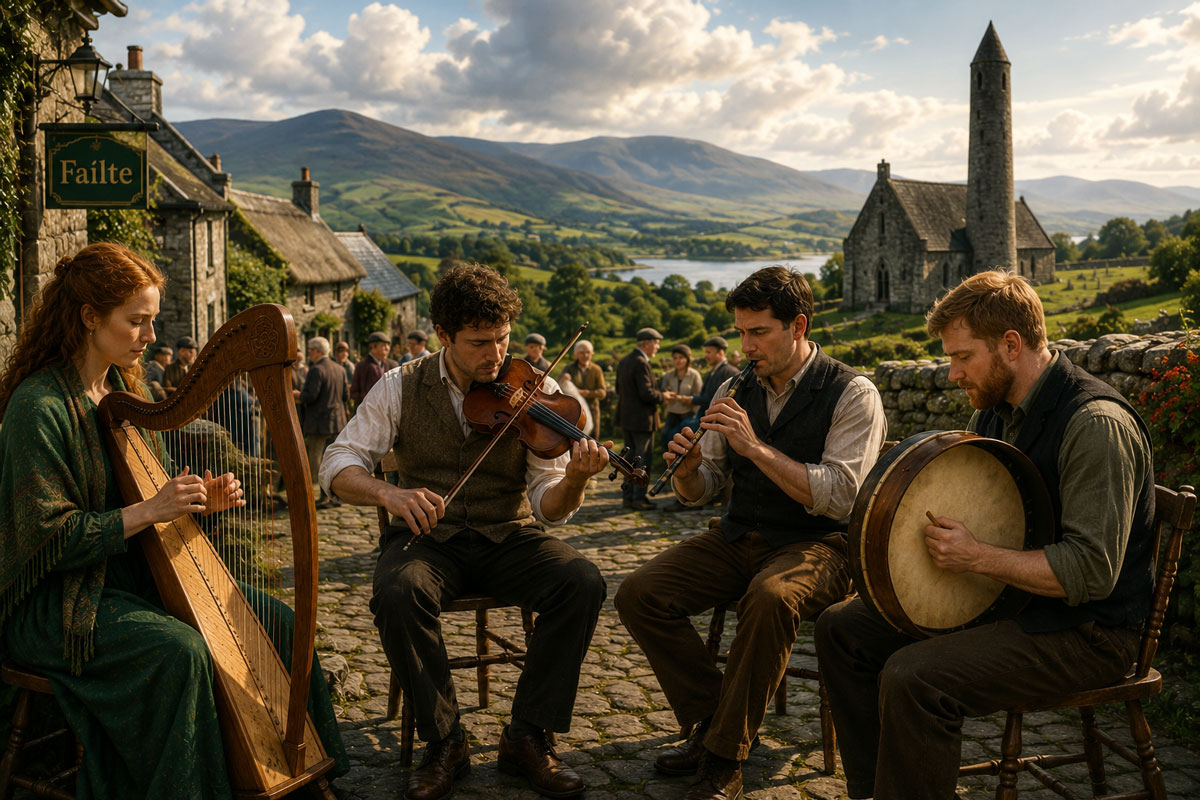
One of the most distinctive features of Irish musical culture is the traditional session. Rather than formal concerts, sessions bring musicians together in pubs and community spaces to play familiar tunes in an informal setting.
Fiddles, flutes, tin whistles, uilleann pipes, accordions, concertinas, guitars, and bodhráns often come together to create lively performances that encourage participation and shared enjoyment.
Sessions reflect one of the defining characteristics of Irish music: it belongs to everyone. Musicians learn from one another, audiences become part of the experience, and traditions continue to evolve while respecting the past.
For many visitors, attending an authentic Irish music session becomes one of the highlights of experiencing Ireland.
Irish Music Today
Modern Irish musicians continue to build upon centuries of tradition while embracing new styles and influences. Traditional music exists alongside rock, pop, folk, classical, and contemporary genres, creating a vibrant musical landscape.
Artists often combine ancient melodies with modern arrangements, introducing traditional sounds to entirely new audiences.
Meanwhile, music education remains strong throughout Ireland, with many children learning traditional instruments from an early age.
This balance between preservation and innovation ensures that Irish music continues to thrive in the twenty-first century.
Why Music Remains Central to Irish Identity
Few countries are as closely associated with music as Ireland. Across the centuries, songs and tunes have preserved history, celebrated victories, mourned losses, and strengthened communities. They have traveled wherever Irish people have gone, carrying memories of home across oceans and generations.
Music continues to unite people regardless of age or background. Whether heard during a lively pub session, a family celebration, a local festival, or a quiet performance of a traditional ballad, it creates a powerful connection to Ireland’s past.
More than entertainment, Irish music represents resilience, creativity, and community. It remains one of the clearest expressions of Ireland’s cultural identity and one of the country’s greatest gifts to the world.