



From the windswept Aran Islands to medieval royal courts, traditional Irish clothing reflects the resourcefulness, artistry, and cultural identity of the Irish people. Whether woven from wool, stitched with symbolism, or cast in shining metal, these garments and accessories offer a glimpse into Ireland’s past and its enduring craftsmanship.
Table of Contents
- Aran Sweaters: Warmth, Craft, and Island Heritage
- Irish Tweed and the Art of Rural Weaving
- Celtic Brooches: From Battle Dress to Decorative Elegance
- Ireland’s Clothing Traditions in Modern Culture
Aran Sweaters — Warmth, Craft, and Island Heritage
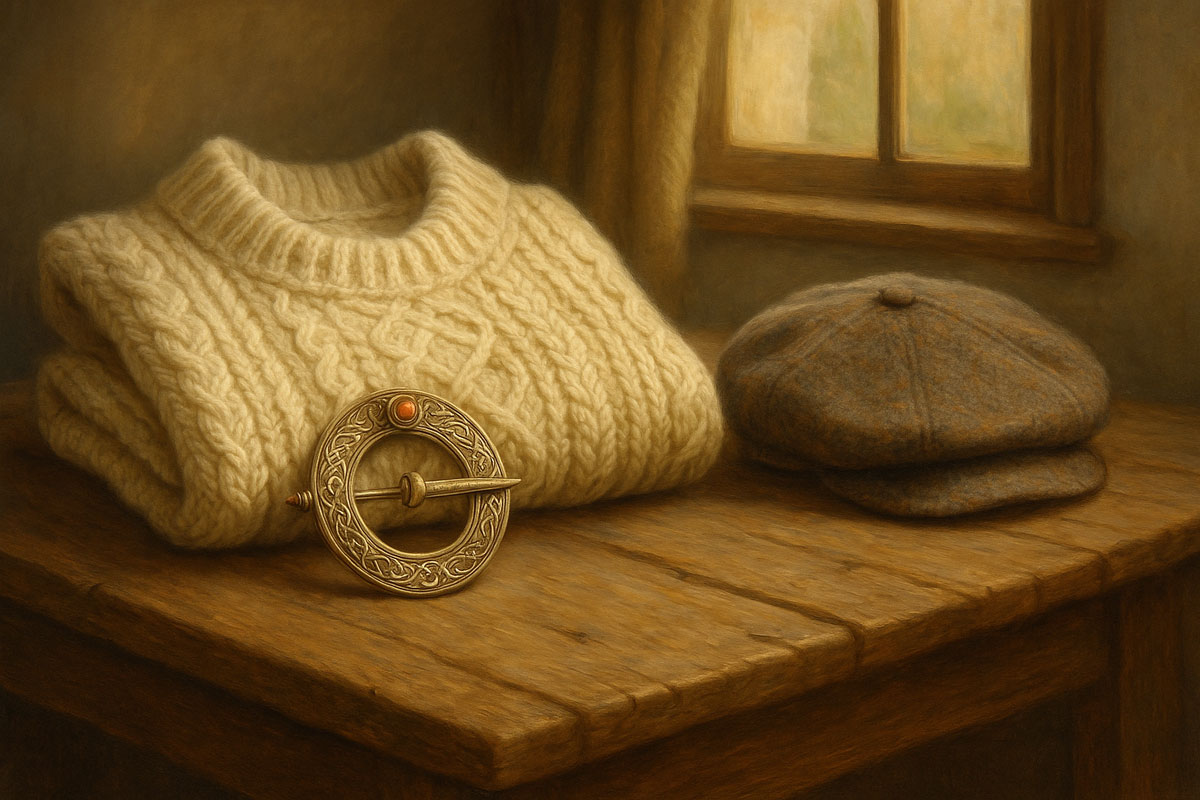
The Aran sweater, also known as the Aran jumper, is one of the most iconic pieces of Irish clothing. Originating in the Aran Islands off the coast of County Galway, these hand-knitted garments were designed to protect fishermen from harsh Atlantic winds and sea spray. Their tightly woven wool provided natural insulation, water-resistance, and durability for life on the ocean.
What makes Aran sweaters legendary is their symbolic stitchwork. Each family developed its own patterns, passed down through generations, with meanings tied to luck, faith, and livelihood. Common stitches include:
- Cable Stitch — symbolizing fishing ropes and hopes for safety at sea
- Diamond Stitch — representing abundance, prosperity, and the island’s stone fields
- Honeycomb Stitch — expressing hard work and the sweetness of reward
While mythology claims that drowned fishermen could be identified by their sweater patterns, historians see these garments mainly as expressions of identity, pride, and artistry. Today, Aran sweaters are beloved far beyond the islands, worn as a fashion statement and a symbol of Irish heritage.
Irish Tweed and the Art of Rural Weaving
Another cornerstone of traditional Irish clothing is Irish tweed, especially the world-famous tweed from Donegal. Known for its flecks of color inspired by heather, lichen, and the rugged landscape, Donegal tweed has been woven in Ireland for centuries.
Historically, local families spun and wove tweed at home using wool from native sheep. Men’s clothing in rural Ireland often included:
- Tweed jackets — durable, warm, and ideal for outdoor work
- Hand-woven waistcoats — worn for fairs, church, and special occasions
- Tweed flat caps — a classic headwear piece now recognized worldwide
The weaving tradition grew into a major industry during the 19th and early 20th centuries, as Irish tweed became sought after across Europe. Today, Donegal tweed continues to be produced using traditional techniques, blending heritage with contemporary design. Modern Irish fashion designers frequently incorporate tweed into coats, scarves, hats, and tailored suits, keeping the craft alive.
Celtic Brooches — From Battle Dress to Decorative Elegance
No item of Irish clothing carries as much historical significance as the Celtic brooch, especially the ornate Tara Brooch and penannular brooches used during the early medieval period. More than jewelry, these brooches were essential tools used to fasten cloaks, mantles, and robes.
Worn by both men and women, they signified status, craftsmanship, and identity. Warriors often wore large bronze brooches that secured heavy wool cloaks, while nobles adorned themselves with intricate pieces made from silver or gold, decorated with:
- interlace patterns
- spirals
- amber or glass inlays
- zoomorphic designs
The Tara Brooch, discovered in the 19th century and dated to around the 8th century, is regarded as the finest example of early medieval metalwork in Ireland. Its filigree, enamel, and symbolic motifs have inspired countless modern reproductions.
In addition to brooches, Ireland’s medieval wardrobe included linen tunics, woolen cloaks, and checkered fabrics similar to early tartans. Clothing was practical, warm, and expressive of clan identity—especially through color and pattern.
Ireland’s Clothing Traditions in Modern Culture
Traditional Irish clothing has undergone a revival in recent decades. Rather than fading into history, garments like Aran sweaters, tweed coats, and Celtic jewelry have found new life through tourism, fashion, and global Irish identity.
Designers across Ireland continue to reinterpret these traditional elements. Aran stitches now appear in modern knitwear collections, from cardigans to oversized scarves. Tweed is used in luxury tailoring as well as casual streetwear. Celtic brooches feature in wedding attire, cultural festivals, and jewelry design worldwide.
Irish dance costumes, inspired by medieval embroidery and folk dress, further demonstrate how heritage continues to evolve. Likewise, events like the National Ploughing Championships or rural fairs showcase traditional clothing still worn proudly by farming communities.
For the Irish diaspora, these garments often serve as a tangible link to family roots. Wearing an Aran sweater, a tweed cap, or a Celtic pendant becomes a way of honoring heritage and keeping ancestral stories alive.
Conclusion
From the rugged practicality of Aran sweaters to the elegance of Celtic brooches, traditional Irish clothing reflects centuries of creativity and resilience. These garments and accessories tell the story of a people shaped by the land, united by craft, and inspired by myth. In homes, markets, festivals, and runways around the world, Ireland’s clothing traditions continue to thrive—woven with pride, memory, and timeless style.